PPWR countdown begins as Commission issues guidance
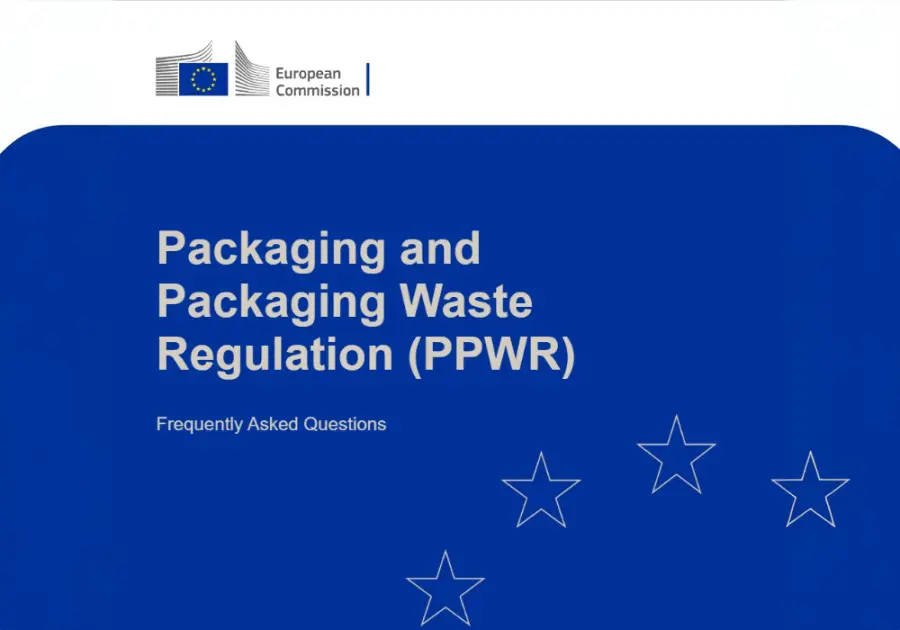
With less than a week until the EU’s Packaging and Packaging Waste Regulation (PPWR) begins to apply, the European Commission has published new guidance and an extensive set of Frequently Asked Questions (FAQs) designed to help manufacturers, brand owners and packaging suppliers navigate one of the most significant regulatory changes to affect the sector in decades.
The guidance comes ahead of the regulation’s general application date of 12 August 2026, providing clarification on how key provisions should be interpreted while acknowledging that further updates may be required as implementation progresses. The Commission stresses that the documents do not create new legal obligations but are intended to promote consistent application of the regulation across all Member States.
For food and beverage manufacturers, the publication answers many of the practical questions surrounding the new rules, offering greater certainty around packaging design, producer obligations and market access.
A regulation covering every packaging format
Unlike previous legislation that focused heavily on waste management, the PPWR applies throughout the packaging lifecycle.
It covers virtually all packaging placed on the EU market regardless of material, including plastic, paper, board, glass, aluminium, steel and composite packaging used across consumer, industrial and transport applications. The regulation also introduces harmonised requirements governing packaging design, sustainability, reuse and waste prevention across the European Union.
For manufacturers exporting into the EU, the Commission reiterates that compliance is required irrespective of where the packaging is produced if products are placed on the EU market.
Practical clarification for manufacturers
Among the most valuable additions within the FAQs are explanations of how manufacturers should interpret several new concepts introduced by the PPWR.
The Commission explains that all packaging must be designed so that its weight and volume are reduced to the minimum necessary while still ensuring product protection, hygiene, safety and functionality. Companies are expected to balance material reduction against maintaining product integrity rather than simply eliminating packaging wherever possible.
The FAQs also clarify that packaging performance requirements continue to take precedence where food safety, shelf life or transport protection could otherwise be compromised.
Greater emphasis on recyclability
The Commission confirms that packaging must increasingly be designed with recycling in mind.
The regulation establishes design-for-recycling requirements that will eventually classify packaging into performance grades, encouraging manufacturers to improve compatibility with existing recycling systems while discouraging difficult-to-recycle formats and unnecessary material combinations.
Although many of the technical criteria will be defined through secondary legislation over the coming years, businesses are encouraged to begin aligning packaging development programmes now.
Reuse becomes part of mainstream packaging strategy
One of the biggest strategic changes highlighted by the FAQs is the shift towards reusable packaging systems.
The Commission explains that reusable packaging is expected to complete multiple rotations within organised reuse systems and must be designed to withstand repeated use while remaining safe and functional. It also clarifies the distinction between genuinely reusable packaging and packaging that is simply refillable by consumers.
For food and beverage companies, this reinforces growing expectations that transport packaging, beverage packaging and certain foodservice formats will increasingly transition towards structured reuse models.
What businesses should do now
The Commission recommends that companies use the guidance to review existing packaging portfolios before the regulation applies next week.
Priority areas include:
- assessing packaging weight and volume optimisation;
- reviewing recyclability of existing formats;
- identifying products likely to fall under future reuse obligations;
- ensuring technical documentation supports compliance; and
- monitoring forthcoming delegated and implementing acts that will establish detailed technical criteria.
More guidance expected
The Commission acknowledges that the PPWR introduces numerous new concepts and that industry has raised a significant number of implementation questions.
It says both the guidance document and the FAQs are “living documents” that may be updated as additional experience is gained following implementation. However, it also reminds stakeholders that only the Court of Justice of the European Union can provide legally binding interpretations of the legislation.
For food and drink manufacturers, the publication represents the clearest indication yet of how regulators expect the PPWR to operate in practice, offering valuable insight as businesses make final preparations before the regulation takes effect on 12 August 2026.