RDM and Dow breakthrough scales circular packaging
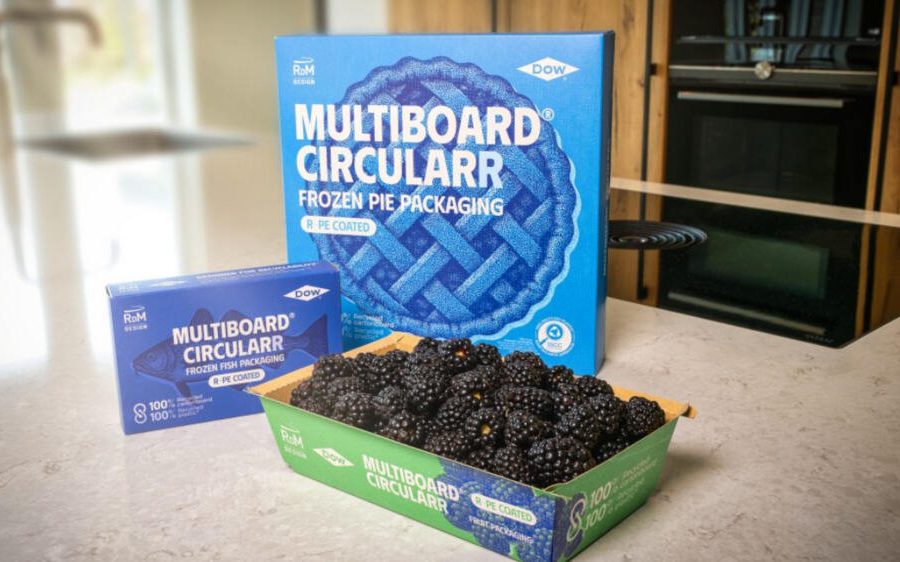
A landmark collaboration between RDM Group, Europe’s leading producer of recycled cartonboard, and materials science giant Dow has resulted in a fibre-based food packaging solution that addresses one of the sector’s most persistent challenges: combining recycled content with high-performance barrier protection.
This partnership brings a first-of-its-kind solution to food and drink manufacturers, utilising cartonboard made exclusively from recycled fibres integrated with a barrier coating made from recycled plastics. For manufacturers, this development represents a significant leap forward in meeting both stringent sustainability targets and the rigorous safety requirements of the food industry.
Historically, the use of recycled fibres in food-contact packaging has been limited by the need for robust barriers to prevent migration and maintain product freshness. Often, these barriers were made of virgin plastics or aluminium, which complicated the recycling process at the end of the product’s life.
The RDM and Dow collaboration solves this by synchronising two distinct recycling streams. RDM Group provides the high-quality recycled cartonboard base, while Dow contributes its expertise in polymer science to create a barrier coating derived from post-consumer recycled (PCR) plastic. By using Dow’s REVOLOOP technology, the partnership ensures that the entire packaging structure — both the substrate and the protective layer — is rooted in circularity.
For food and drink brands, this innovation offers a pathway to decouple growth from virgin material consumption without compromising on shelf life or structural integrity. The primary advantage is the drop-in nature of the material; it is designed to run on existing packaging lines, allowing manufacturers to improve their environmental profile without massive capital expenditure on new machinery.
Furthermore, the collaboration provides a vital response to the Plastic Packaging Tax and the EU’s Packaging and Packaging Waste Regulation (PPWR). By incorporating recycled plastic into the coating, manufacturers can significantly reduce their tax liabilities while appealing to the growing demographic of eco-conscious consumers who scrutinise packaging labels for recycled content claims.
By proving that recycled plastic barriers can perform effectively on recycled fibre bases, this collaboration challenges other manufacturers to look beyond monomaterials and explore how hybrid, recycled-content structures can provide the protection food requires while maintaining a fully recyclable footprint.