Novel foods need trust, not just tech
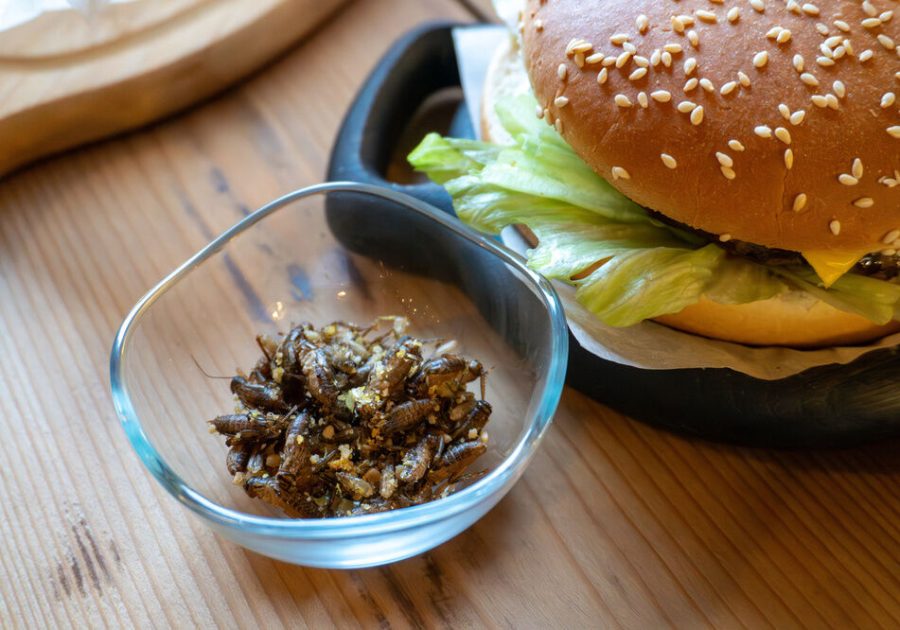
Europe’s food innovators are pushing into territory that would have sounded like science fiction a decade ago: dairy proteins grown by precision fermentation, meat cultivated from animal cells, ingredients derived from insects.
Getting these products through the EU’s novel food authorisation process is one challenge. Getting consumers to actually buy them, a new report suggests, is a separate and arguably harder one.
The EIT Food Consumer Observatory’s latest report, Trust in Innovation: Between Familiarity and Fear, argues that regulatory clearance means little without public trust behind it.
Released ahead of World Entrepreneurs Day, the report is the third instalment in EIT Food’s TrustTracker series and draws on responses from roughly 20,000 consumers across Europe. EIT Food is backed by the European Institute of Innovation and Technology, an EU body — a detail worth noting given the pro-innovation lens the research inevitably brings.
Openness Is rising, slowly
The headline number looks encouraging at first glance: overall openness to innovative food products climbed from 28% in 2024 to 31% in 2025. But the report is careful to frame that shift as fragile rather than settled, and the data underneath it tells a more complicated story.
Trust turns out to be doing most of the work. Among consumers who trust the food system, 38% say they’re open to innovation; among those with low trust, just 6% say the same. That gap dwarfs most of the demographic splits in the report and points to trust — in regulators, manufacturers, retailers and communicators alike — as the real factor for adoption, not familiarity with the science itself.
Familiar names, cooling reception
Set against that modest overall uptick is a more uncomfortable finding: willingness to try several specific technologies actually fell between 2024 and 2025. Insect-based protein, precision-fermentation dairy and cultivated meat — the categories that have drawn the most investment and media attention — were also the ones consumers grew more wary of.
The report attributes this partly to friction with cultural, personal or religious values, and partly to visceral reactions like disgust or unfamiliarity that no amount of technical explanation easily overcomes. For manufacturers who have leaned on safety data and process transparency as their main persuasion tools, it’s a signal that the messaging may need to shift register entirely.
A generational divide
Age remains the sharpest dividing line in the data. Nearly two in five consumers aged 18–34 describe themselves as open to new food products, compared with fewer than one in five among those aged 55 and over. Younger consumers aren’t just more curious — they appear more willing to extend provisional trust to new technologies before all the answers are in.
Trust also determines whether values-driven consumers convert into innovation adopters. Among people with a strong intention to eat healthily, 32% of high-trust respondents say they’re willing to try new technologies, versus just 8% of low-trust respondents. Sustainability-minded consumers show an almost identical pattern: willingness rises from 10% among low-trust respondents to 35% among those with high trust. In both cases, values alone don’t move behaviour — trust is the multiplier.
The case for humanising innovation
“Food innovation will only succeed if consumers trust the people and systems behind it,” said Klaus G. Grunert, Professor of marketing at Aarhus University and lead of the EIT Food Consumer Observatory. He said curiosity about innovation is increasing, but unfamiliar technologies still face significant barriers, and that building acceptance means innovators moving past technical explanations to show clearly how new foods are safe, useful, enjoyable and relevant to everyday life.
One of the report’s main recommendations is less emphasis on how a technology works, more on connecting it to people, values and everyday benefit — taste, health, pleasure, relevance. For an industry that has often defaulted to safety-first, science-led communication, it’s a prompt to rethink who the story is actually for.
Trust
The novel food pipeline in Europe isn’t short on innovation — it’s short on permission. As authorisation processes clear more precision-fermentation and cultivated products for market, the EIT Food data suggests the deciding factor won’t be regulatory approval or ingredient novelty, but whether consumers trust the institutions putting these products on shelves in the first place. Brands that treat trust-building as a communications afterthought, rather than a core part of product launch strategy, may find acceptance harder to win back than it was to lose.