Welsh investment puts surplus food on the menu
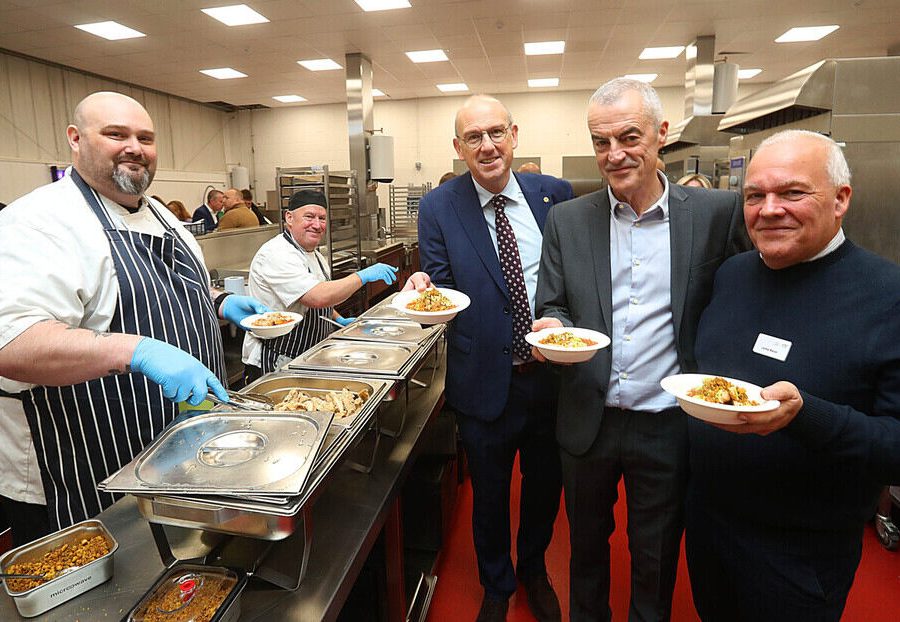
Well-Fed has opened a new food production facility in Shotton, Flintshire, backed by investment from the Welsh Government, The National Lottery Community Fund and Moondance Foundation.
Designed to expand the production of healthy, affordable ready meals while tackling food waste and insecurity, the facility demonstrates how food manufacturing can combine circular economy principles with social impact.
Investment expands sustainable food production
A new food production facility in North Wales is set to increase the capacity to turn surplus ingredients into nutritious, affordable ready meals, following investment in social enterprise Well-Fed.
Officially opened in Shotton, Flintshire, the facility has been developed with financial support from the Welsh Government, The National Lottery Community Fund and Moondance Foundation. It is expected to become the largest operation of its kind in the UK, combining food manufacturing with a model designed to address food insecurity and reduce waste.
The investment will enable Well-Fed to expand production and distribution of meals made using surplus food sourced from across the region. It will also provide capacity for the organisation to develop new approaches to sustainable food production, strengthen local supply chains and support future growth.
For the wider food and drink sector, the facility highlights how surplus ingredients can be incorporated into a structured manufacturing operation, creating value from materials that might otherwise be discarded.
Turning surplus ingredients into meals
Established in 2019, Well-Fed has supplied more than one million fresh meals to households facing food insecurity. Its range includes more than 140 nutritionally assessed meal options, with the organisation operating one of the UK’s only large-scale ready meal services free from ultra-processed ingredients.
The new facility is expected to process up to 500 tonnes of surplus food annually. New technologies and systems are being introduced to improve production efficiency and support the sustainable use of ingredients.
The model addresses two challenges facing the food system: the environmental impact of food waste and the need to improve access to healthy, affordable food.
Using surplus ingredients in ready meal production requires an approach that can accommodate variations in ingredient availability while maintaining nutritional standards, product quality and operational efficiency.
The expanded facility will give Well-Fed greater capacity to manage this process and reach more communities across Wales.
Robbie Davison, director at Well-Fed, said the investment would provide the capacity needed to expand, innovate and increase the organisation’s reach.
“This new facility represents a major investment in the future of Well-Fed and creates the capacity we need to grow, innovate and reach more communities across Wales.
“As demand continues to increase, the new site will enable us to expand production, create employment opportunities and develop new ways of turning surplus food into healthy, affordable meals. We’re proud to be showing how innovation in the food sector can deliver economic growth, environmental benefits and positive social impact.”
Circular manufacturing reduces packaging waste
The facility’s sustainability measures extend beyond ingredient sourcing.
Well-Fed is introducing reusable metal trays, which are expected to replace up to 160,000 single-use plastic trays over the next two years.
The initiative illustrates how packaging choices can form part of a broader resource-efficiency strategy, alongside the recovery of surplus ingredients and improvements to production systems.
For food manufacturers, reusable packaging can offer an opportunity to reduce reliance on single-use materials, although its overall environmental performance depends on factors including cleaning, transport, reuse rates and end-of-life management.
The facility’s approach therefore brings together food recovery, production efficiency and packaging reuse as interconnected elements of its sustainability strategy.
Investment supports jobs and food resilience
The expanded operation is also intended to deliver economic and social benefits locally.
Well-Fed currently employs 24 people, including 18 local employees who were previously unemployed. The additional production capacity is expected to create further opportunities for employment and development.
The investment is also intended to strengthen local supply chains and increase food production capacity in North Wales, supporting the region’s wider food and drink economy.
Llyr Gruffydd MS, Cabinet Minister for Rural Resilience and Sustainability, who officially opened the facility, said the investment demonstrated how food businesses could combine growth with environmental responsibility and community benefit.
“This investment by Well-Fed demonstrates how Welsh food businesses can combine commercial growth with environmental responsibility and community benefit. This new facility will help strengthen food production capacity in North Wales, support employment opportunities and showcase the innovative approaches being developed here in Wales to tackle some of the challenges facing our food system.”
He added that supporting businesses to grow, innovate and invest in sustainable solutions was central to the Welsh Government’s ambitions for the food and drink sector.
A different approach to food manufacturing
Well-Fed’s investment demonstrates how food production infrastructure can be designed around both manufacturing capacity and social need.
By creating a larger-scale operation for surplus ingredients, the organisation aims to improve the availability of nutritious meals while reducing food waste and supporting local employment.
The facility’s longer-term significance will depend on its ability to maintain a reliable supply of surplus ingredients, manage production efficiently and expand access to affordable meals.
For the food and drink industry, it provides an example of how circular economy principles can be integrated into food manufacturing, with the potential to deliver environmental benefits alongside economic and community value.