Europe urged to ferment its own protein
21st.Bio fermentation.
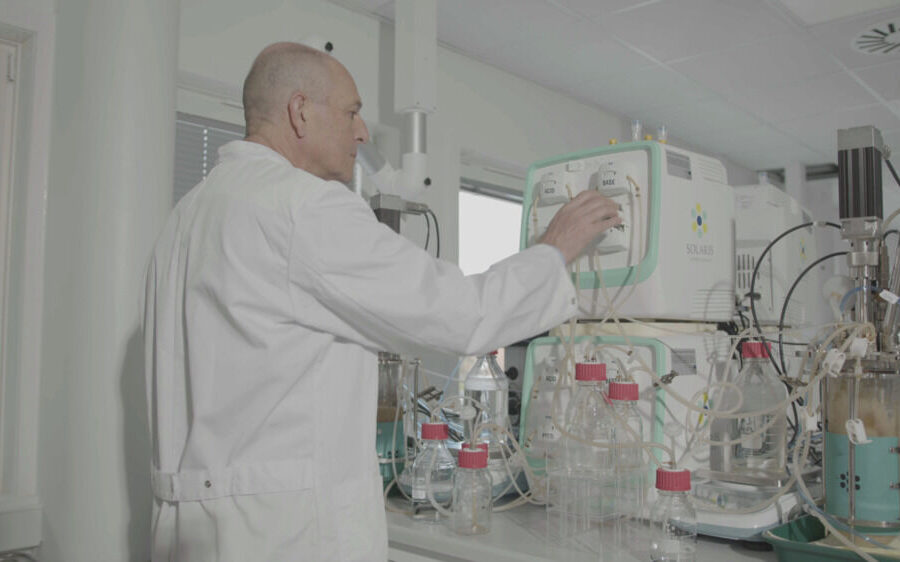
Danish precision fermentation company 21st.BIO has filed an EU Novel Food application for BLG Essential+, its production technology for bovine beta-lactoglobulin (BLG), and is using the moment to call on European regulators for a fast-track route to market for well-characterised, nature-identical food proteins.
The Copenhagen-based company, which describes itself as an industrial biotechnology business enabling low-cost, large-scale production of high-quality protein through precision fermentation, announced the filing on 12 November 2026. It follows regulatory approval for sales in the US, obtained in October 2025, and the company says it now offers the same technology to the European market.
If approved by the European Food Safety Authority (EFSA), 21st.BIO says BLG Essential+ could enable resource-efficient milk protein production and sale in Europe, and help address supply constraints in the European whey protein market.
The protein in question
BLG is the predominant protein in whey protein from milk, valued for its high-quality amino-acid profile and versatile functionality. According to 21st.BIO, BLG Essential+ is essentially a copy of the best protein in milk, produced through precision fermentation. The company says its fermentation technology enables a consistent cost offering and scalable production that can complement conventional dairy supply and strengthen regional protein supply wherever it is approved for production and sale.
The company points to soaring demand for high-quality protein, positioning BLG as suited to elderly and sick people who need nutritional support for muscle maintenance, building and recovery, and to people on weight-loss medication who want to maintain and build muscle while losing fat. It also highlights BLG’s suitability for compact nutrition, from people on the go to those in conflict zones, or even travelling to Mars.
A home market for fermentation
The filing is paired with a policy argument. Europe, 21st.BIO says, is already a region of excellence for precision fermentation, with industrial capabilities built over decades by companies such as Novonesis and a strong science base across Denmark and the wider EU.
“Europe has the science, the companies and the industrial heritage in precision fermentation to lead the wave of healthy and nutritious food production,” said Thomas G. Schmidt, co-founder and CEO of 21st.BIO.
“What Europe still needs is a home market that allows industrially proven technology to move from laboratories into fermentation factories built in Europe. A predictable, science-based route to market can strengthen food resilience, attract industrial investment and ensure that European innovation is commercialised in Europe.”
The company argues that approval of the technology could unlock significant investment and enable industrial production facilities across Europe, creating jobs for scientists, operators, technicians and skilled workers while strengthening European equipment manufacturers, process-design companies and scientific leadership.
The ask to regulators
21st.BIO says preparing a full EU dossier required years of scientific and procedural work and significant investment, while the subsequent approval process and timeline make it tough for innovators and manufacturers to plan investments, facilities and product launches in Europe.
It is therefore calling for a fast-track pathway for well-characterised, nature-identical food proteins produced using host strains and technologies with a demonstrated record of safe use. Such a pathway, it says, should preserve Europe’s high safety standards while giving applicants and market developers a clearer timetable.
“This is not a choice between safety and speed,” Schmidt added. “It is an opportunity to apply the best science to achieve both. Europe can protect consumers, offer healthy and nutritious food options to Europeans, and offer nutritional self-sufficiency, industrial production, skilled jobs and sustained technology leadership.”
Safety built into the strain
BLG Essential+ is produced using Aspergillus oryzae, a microorganism used for centuries in Japanese food fermentation, including soy sauce and miso. The production platform was developed and refined over decades by Novonesis and further advanced by 21st.BIO for safe, efficient food protein production at massive scale.
A 2025 peer-reviewed study in Applied Microbiology and Biotechnology described the strain lineage as the first mycotoxin-free A. oryzae lineage for industrial production of alternative and novel proteins. It documented the absence of the known mycotoxin biosynthesis pathways covered by the study and the inactivation of the penicillin G gene cluster.
“This is a well-characterized production platform with consumer safety designed into the strain,” said José Arnau, chief of strain engineering and regulatory affairs at 21st.BIO and co-author of the study. “Advanced genome analyses allow regulators to assess safety at strain level with far greater precision, and for proven platforms producing proteins that match those found in nature, the regulatory requirements should be lower and the safety evaluation more straightforward… and faster.”
Production capacity
The filing is as much a statement of intent as a regulatory submission. By pairing the application with a call for a predictable, faster route to market, 21st.BIO is making the case that Europe’s established fermentation expertise will only translate into European production capacity if the approval pathway gives investors enough certainty to build. Its argument rests on a distinction between novel proteins and those that match what is found in nature, made with a host organism that has a demonstrated record of safe use.
For the whey protein market, the commercial prize the company describes is a precision-fermented BLG that complements, rather than replaces, conventional dairy.
Topics
BLG bovine beta-lactoglobulin novel food precision fermentation proteins whey protein
PeopleOrganisations