 Building a brand
 Why Waitrose became the right retail partner
 The operational reality of scaling up
 Scaling without reformulating
 Managing ethics at scale
Scaling FATSO for supermarket success
For many challenger food brands, the journey from independent retail to national grocery is often framed as a moment of arrival. But for premium dark chocolate brand FATSO, the transition into nationwide distribution with Waitrose & Partners was less about chasing scale for its own sake and more about finding the right operational and philosophical fit.
After three years building a loyal following through independent retailers, cafés and hotels, FATSO has secured an exclusive national rollout with Waitrose — a move that significantly expands the brand’s visibility while simultaneously raising the technical, logistical and operational stakes behind the scenes.
For co-founder Ella McKay, the challenge was never simply increasing output. The real test was whether the company could scale without diluting the very characteristics that made the brand stand out in the first place: oversized chunks, generous inclusions, playful branding, and a strong commitment to ethical sourcing.
The result is a case study in what modern scaling looks like for premium food brands: less about reinventing production and more about building systems, consistency, forecasting discipline and supply-chain resilience capable of supporting retail-level expectations.
 Building a brand
Before national grocery came into view, FATSO’s growth was shaped by direct interaction with customers and buyers in independent channels. According to McKay, those early years became a form of real-time product development and brand testing.
“Selling through independents, cafés and hotels gave us direct, unfiltered feedback from both buyers and customers,” she explains. “We could see immediately what stopped people, what got picked up, and what made them come back for more.”
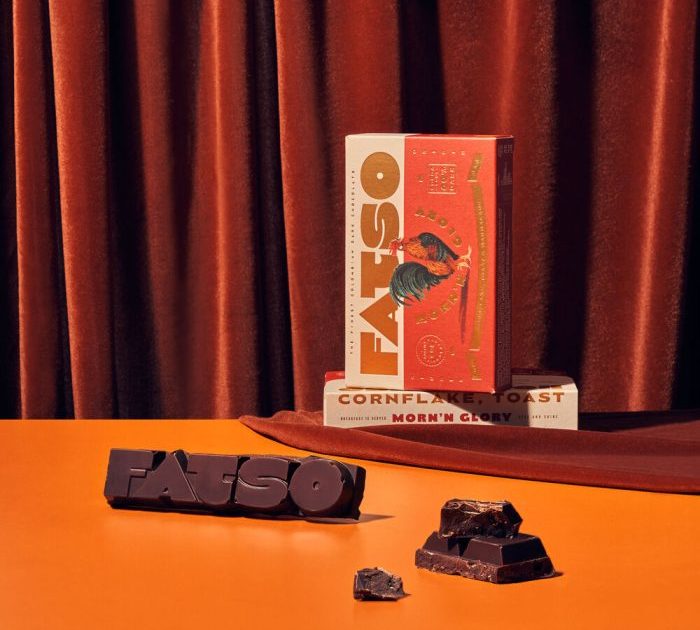
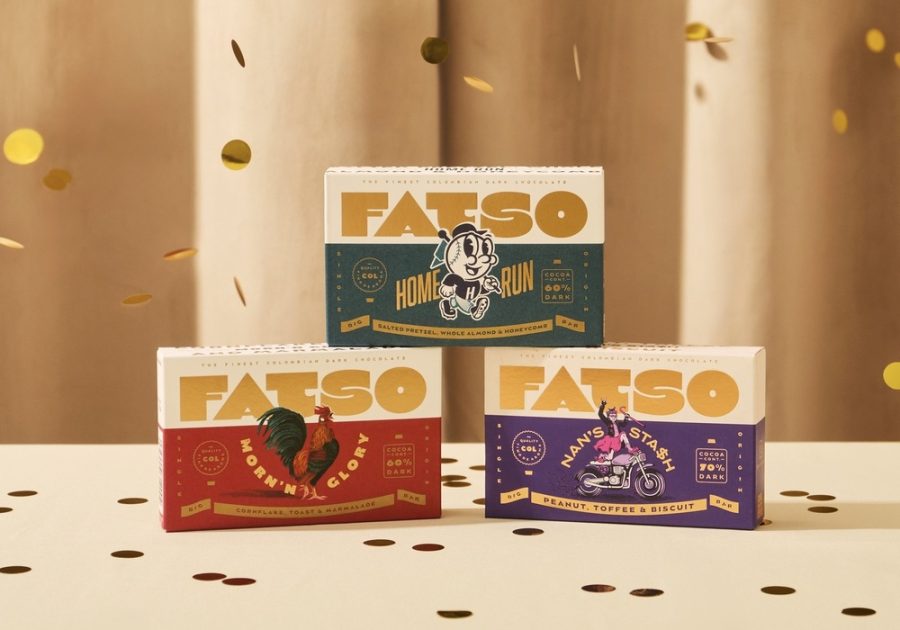
That environment helped the business refine both its visual identity and product proposition. FATSO’s bright packaging, character-led design and bold shelf presence quickly became a central part of its discovery strategy. In crowded retail environments, the brand’s aesthetic effectively acted as its own merchandising tool.
Yet while the packaging drove initial attention, repeat purchase depended on product delivery. FATSO’s chunky format, heavy inclusion load and flavour combinations created a sensory experience that differentiated it from more restrained premium chocolate competitors.
McKay says the company quickly recognised that consumers were willing to embrace a more playful tone, provided quality and sourcing standards remained uncompromising.
“As people spent more time with the brand, the quality and ethical credentials reassured them that indulgence didn’t come with compromise,” she says. “That response gave us confidence: if we stayed uncompromising on quality, we could afford to stay playful.”
That combination — serious sourcing credentials paired with irreverent branding — would later become central to FATSO’s supermarket proposition.
 Why Waitrose became the right retail partner
For many emerging brands, entering grocery retail can create pressure to soften differentiation in pursuit of mainstream appeal. McKay insists FATSO deliberately resisted that instinct.
“There’s always a risk when you scale that you smooth off the edges, but for us those edges are kind of the point,” she says.
Rather than treating supermarket distribution as an inevitable milestone, the company waited until it found a retailer aligned with its existing values around quality and sourcing. According to McKay, Waitrose represented that fit.
“It was never really about a ‘next step’,” she says. “It was about whether it was the right step.”
The partnership reflects broader trends within premium grocery, where retailers are increasingly seeking brands capable of bringing energy and differentiation into mature categories such as chocolate. While heritage and minimalist aesthetics continue to dominate parts of the premium confectionery sector, FATSO offers something visually louder and more flavour-led.
McKay believes that combination appealed to Waitrose buyers looking for products that balance quality expectations with discovery-led shopping behaviour.
“On one hand, it’s delicious, high-quality, ethically sourced dark chocolate,” she says. “On the other, our big flavours, generous inclusions and bold personality bring something new and exciting to the aisle.”
The operational reality of scaling up
While the consumer-facing narrative around retail expansion often focuses on listings and visibility, the operational implications are considerably more complex.
For FATSO, moving into national grocery required a significant increase in planning discipline rather than wholesale changes to manufacturing infrastructure.
“Planning, without a doubt,” was the biggest upgrade says McKay.
“When you’re working with independents, you can be a bit more flexible. At this scale, you can’t. Everything from ingredient ordering to production slots needs to be mapped out much further in advance.”
The shift illustrates one of the most important operational differences between independent and supermarket supply models: predictability.
Independent retail channels can often absorb fluctuations and smaller production variability. National grocery cannot. Retailers expect reliable replenishment cycles, consistent product availability and precise forecasting accuracy.
McKay says the real challenge is not necessarily producing more volume, but producing consistently at fixed rhythms.
“Working with Waitrose means producing to a much more fixed rhythm, larger, more regular runs, with very little room for variation,” she explains.
That operational consistency extends beyond manufacturing into supplier coordination, inventory management and forecasting accuracy. FATSO has had to introduce more formal structure into relationships with manufacturing partners to ensure continuity and repeatability across larger-scale production cycles.
 Scaling without reformulating
One of the most notable aspects of FATSO’s retail expansion is how little the underlying product or process needed to change.
McKay says the company had already built its manufacturing foundations to supermarket-level standards before securing the listing.
“We were already producing to supermarket standards, working with an AA-rated BRC accredited factory,” she says. “So scaling up was more about planning and volume forecasting than altering the product or process itself.”
That preparation reflects a growing trend among ambitious challenger brands: building technical compliance and food safety systems early, rather than retrofitting them once retail opportunities emerge.
By establishing BRC-accredited manufacturing capability from the outset, FATSO reduced the operational disruption typically associated with grocery onboarding. Instead of reformulating or redesigning processes, the company could focus on capacity planning and supply-chain coordination.
However, maintaining FATSO’s signature product characteristics at higher volumes still required careful technical consideration.
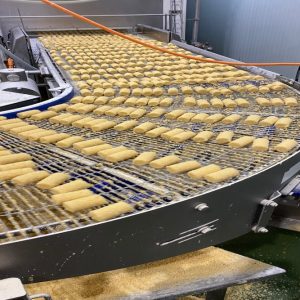
The brand’s intentionally chunky structure and high inclusion content create manufacturing challenges that differ from more uniform chocolate bars. Inclusion distribution, mould consistency and texture control become increasingly important as production scales.
McKay says the company invested early in production capability capable of preserving those defining characteristics.
“We invested early in a production line that could deliver big chunks and generous texture at scale,” she explains.
Importantly, FATSO has resisted pursuing absolute uniformity. McKay acknowledges that natural variation remains part of the product’s identity.
“Our ingredients are natural, and things like the crop, the season, and even how a bar ages will subtly change the flavour over time,” she says. “We actually like that. It keeps the product alive.”
Instead, the company focuses on controlling standards rather than eliminating all variability. Recipe parameters, mould sizing and inclusion loads are tightly managed to ensure consistency of experience rather than identical replication.
Managing ethics at scale
As cocoa supply chains face growing scrutiny around sustainability, traceability and farmer welfare, scaling ethically sourced chocolate presents additional complexity.
FATSO’s sourcing partnership with Luker Chocolate has become increasingly central as production volumes expand.
McKay describes the relationship as foundational to maintaining transparency and sourcing integrity during growth.
“Because they’re so connected to origin, we’ve got a really clear line of sight on where the chocolate comes from and how it’s produced,” she says.
That visibility has become especially important during recent cocoa supply volatility and pricing disruption. According to McKay, FATSO worked closely with Luker during crop shortages affecting African cocoa production and the resulting pressure placed on South American growers.
“For Luker’s farming communities, we ensured that a minimum of 90% of market price increases were passed directly to farmers rather than absorbed by intermediaries,” she says.
The emphasis on direct sourcing relationships also supports FATSO’s broader brand positioning. McKay argues that ethical sourcing should not require overly serious or self-righteous communication.
“The ethics side is non-negotiable for us, but we don’t feel the need to present it in a heavy or overly worthy way,” she says. “You can care about sourcing and still be light-hearted and fun.”
That approach aligns with changing consumer expectations, particularly among younger premium shoppers who increasingly expect ethical standards to be embedded rather than performative.
Meeting retailer expectations
Entering a retailer such as Waitrose involves more than simply supplying compliant products. Grocery buyers increasingly expect brands to contribute strategically to category development, shopper engagement and repeat purchasing behaviour.
McKay says successful grocery partnerships depend on delivering both operational reliability and genuine category differentiation.
“A retailer like Waitrose expects a clear point of difference, the ability to deliver consistently, and driving repeat demand, not just novelty,” she explains.
That balance between excitement and repeatability is particularly important in premium confectionery, where innovation cycles can sometimes prioritise short-term attention over long-term consumer loyalty.
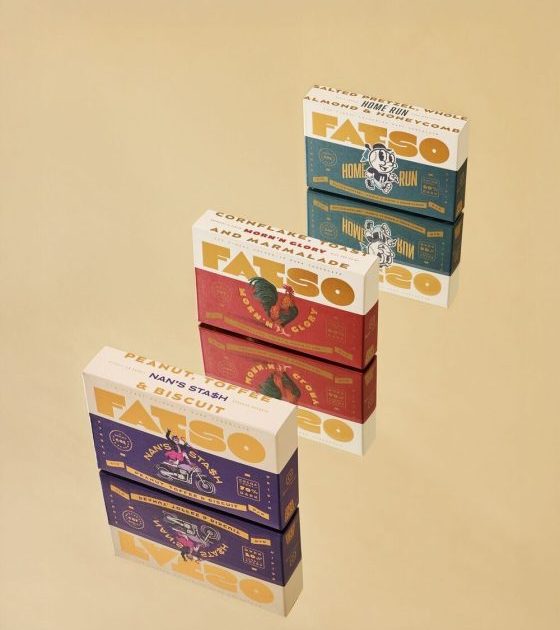
FATSO’s initial Waitrose range — Morn’n Glory, Nan’s Stash and Home Run — was selected specifically because the products already represented the company’s strongest-performing SKUs across independent retail.
“They’re our original, best-selling bars and really capture the breadth of what FATSO is about,” says McKay.
The strategy reflects a disciplined approach to retail ranging. Rather than overwhelming new consumers with extensive innovation, FATSO focused on products already validated through repeat purchase behaviour.
That philosophy also shapes the company’s broader innovation pipeline.
“We start with the customer,” says McKay. “If it’s not something we genuinely want to eat — and come back to — it doesn’t go anywhere.”
The new discipline of forecasting and visibility
For growing food manufacturers, national grocery often creates entirely new forecasting pressures.
Production scheduling becomes less reactive and more data-dependent. Ingredient procurement timelines extend further into the future. Manufacturing windows become increasingly fixed.
McKay suggests that operational maturity increasingly depends on resilience and predictability rather than entrepreneurial flexibility alone.
“Everything has to be more structured and resilient,” she says.
That transition frequently represents one of the biggest cultural shifts for challenger brands. The creative spontaneity that fuels early growth must eventually coexist with formal operational systems capable of supporting national retail distribution.
FATSO appears to be navigating that balance by expanding selectively while maintaining a relatively lean internal structure.
“We’ve brought in a bit more structure, but we’re still a small team,” says McKay. “We’ll always keep that original energy — it’s still very hands-on.”
Redefining premium dark chocolate
For FATSO, the Waitrose launch represents more than increased distribution. It also signals an attempt to reshape expectations within premium dark chocolate itself.
Historically, the category has often leaned heavily on restrained branding, minimalist aesthetics and heritage storytelling. FATSO is deliberately pursuing something more expressive and contemporary.
“We want to continue pushing what people expect from dark chocolate,” says McKay. “We’re beginning to redefine what the category looks and feels like.”
The company’s long-term ambition is not simply broader distribution, but cultural repositioning: proving that premium chocolate can remain ethically rigorous while also being playful, flavour-driven and visually disruptive.
For the wider food and drink sector, FATSO’s expansion offers a revealing example of what modern scaling increasingly requires. The transition from indie success to grocery retail is no longer solely about production capacity. It depends equally on forecasting discipline, technical readiness, sourcing transparency and operational consistency.
Above all, it requires brands to scale without erasing the characteristics that made consumers care in the first place.
For FATSO, maintaining those edges may ultimately be the most important operational decision of all.