The new architecture of snacking
The snacking and frozen desserts industries are undergoing one of the most significant shifts in decades.
At a presentation hosted by Glacier and Cerealto in London, UK, senior leaders from both businesses — alongside private equity investor Afendis — outlined how private label growth, GLP‑1‑driven consumption changes, and rapid advances in manufacturing technology are reshaping the future of food.
Across ice cream, biscuits, bars and rice cakes, the message was clear: consumer expectations are fragmenting, innovation cycles are accelerating, and manufacturers are becoming strategic partners rather than silent suppliers. What emerged was a detailed, insider view of how two major European producers are positioning themselves at the centre of this transformation.
A new manufacturing landscape
The conversation opened with a structural shift that has defined the last decade of European food manufacturing: the rise — and premiumisation — of private label.
Cem Karakaş, managing partner at Afendis and executive chairman of Glacier and Cerealto, framed the change bluntly. “We believe that there is a fundamental shift in European food manufacturing… brand owners are focusing on what they know best — following consumer trends and innovative new products — and they resort to partners like us to help them bring those products to market in an agile manner at an efficient manner.”
This shift is not simply about cost. It is about capability.
Matt Frost, CEO of Glacier, described how private label has evolved from a budget alternative into a strategic growth engine for retailers: “I was in private label in the UK in 1990… you only bought it if you were desperate. To see private label being at 50% plus in the marketplace just shows how far private label has gone.”
Today, private label accounts for more than half of market share in several European countries. In Spain, it reaches two‑thirds. In Mexico — where private label barely existed a decade ago — retailers are now actively importing European private label strategies.
Alfonso Arroyo, Cerealto’s head of product development, highlighted the implications: “Private label is not the cheap version of a branded product anymore. Now private label is in its own right an opportunity to be unique for retailers and to talk to their consumers directly.”
This shift has elevated co‑manufacturers into strategic partners. They are no longer simply producing to spec—they are co‑designing categories.
Co‑manufacturing as co‑innovation
The transcript makes clear that Glacier and Cerealto see themselves not as factories, but as innovation engines.
Karakaş described the modern co‑manufacturer as “an integral part of the brand owners’ organisation… bringing to the market a lot of new products.”
Frost expanded on how this changes the relationship with retailers: “It’s a much more collaborative process… we drive those conversations. We use social media tools and various other bits and pieces to get a really clear view of what’s happening in the market as things bubble up.”
This is not theoretical. It is operational.
Glacier’s innovation cycles in ice cream now mirror fast fashion: “40% of what we made this year, we won’t make next year.”
Cerealto’s median ideation‑to‑launch timeline is seven months — far faster than most branded manufacturers.
Both companies emphasised that speed is now a competitive advantage, and technology is the enabler.
AI, neuroscience and the new science of product design
One of the most striking parts of the discussion came from Arroyo, who explained how Cerealto blends behavioural science with AI to identify emerging trends:
“We mix human behaviour and technology… we use AI to support us to take the correct decision with agility.”
This includes eye‑tracking in real retail environments, neuroscience‑based consumer testing, AI‑driven trend prioritisation and cross‑market behavioural analysis
The goal is to understand what consumers want before they articulate it.
Arroyo offered a concrete example: the development of legume‑based rice cakes. “We mix technology, our expertise and raw materials… chickpeas and lentils… 25% protein, 10% fibre, but don’t forget the flavour and texture.”
These products now sell at or above branded price points, demonstrating how private label has become a premium proposition.
GLP‑1 and the new logic of indulgence
The rise of GLP‑1 medications (Ozempic, Wegovy) is reshaping consumption patterns—particularly in the US, where adoption is highest. But contrary to expectations, consumers are not abandoning indulgence.
Frost explained: “We haven’t seen people trade out of ice cream, we’ve just seen people trade across ice cream.”
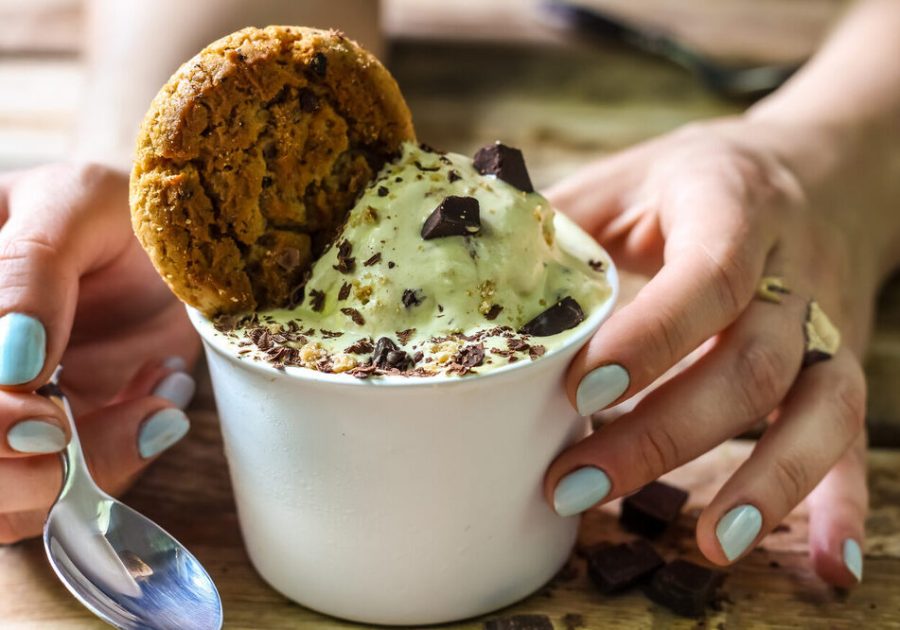
Instead of pints, consumers are choosing Mini cones, Mini sticks, Bite‑sized bon bons and fruit‑forward ice lollies.
These formats support portion control while delivering intense flavour. Frost noted: “Taste remains the most important thing in food… we need to innovate and deliver that amazing hit of taste, but in a much smaller portion.”
Sebastian Lena, Glacier’s category director, described this as the “snackification of the freezer.”
“Ice cream currently makes up only 10% of the snacking stomach… bites are driving incremental sales, 65% incremental.”
This is not cannibalisation — it is category expansion.
Engineering the bite revolution
The rise of ice cream bites is not just a consumer trend—it is a manufacturing challenge.
Lena explained: “It’s easy to make one bite… but to make a bite that is super indulgent at scale at an affordable price, that’s very difficult.”
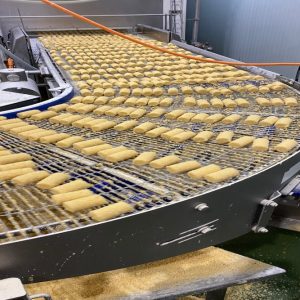
Glacier has invested ahead of the curve with a two high‑speed automated bite lines already running, a third line ordered, advanced robotics for multi‑flavour pack assembly and new cutting and extrusion technologies co‑developed with equipment partners.
Frost emphasised the complexity: “This tech didn’t exist… we had to sit with major manufacturing partners to talk about how to cut an extruded piece in a way that had never been done before.”
The result is a capability that few manufacturers globally can match. Frost estimated: “At least half—more than half—of the bites in the market this season will be coming from Glacier.”
Health, indulgence and the “good & good” paradigm
Across biscuits, bars and cereals, Cerealto sees a convergence of health and indulgence.
Arroyo summarised the consumer mindset: “They want good and good… healthy, less sugar, more protein, more fibre… but at the same time they want indulgence.”
This has driven protein‑enriched biscuits, high‑fibre soft‑baked cookies, low‑calorie biscuits (299 kcal per 100g) and sugar‑reduced cereals without artificial sweeteners.
The challenge is technical: “You can do whatever you want… if you don’t offer the taste, you’re lost.”
This is where Cerealto’s R&D strength becomes visible. Its patented low‑calorie biscuit is a standout example of how manufacturing innovation can reshape category norms.
HFSS: regulation as a catalyst
UK HFSS rules have accelerated reformulation across the snacking aisle.
Arroyo noted: “We have been working on these recipes… reducing sugar, fat, salt… our non‑HFSS portfolio now represents 30% of our overall product range.”
Rice cakes—particularly legume‑based varieties—have become one of Cerealto’s fastest‑growing categories globally, aligning perfectly with HFSS‑driven demand for permissible snacking.
US influence and global trend migration
Both companies emphasised the importance of US trend‑spotting.
Arroyo: “Emerging concepts coming from the US… in some years they travel to the UK and Europe.”
This includes GLP‑1 portion behaviour, bakery‑inspired flavours, fruit‑forward indulgence formats and high‑protein snacking.
Glacier’s Dubai chocolate bite — vanilla ice cream with pistachio and chocolate layers — is a direct example of US‑originating flavour trends migrating into European innovation pipelines.
Manufacturing as a Strategic Capability
Karakaş closed the session with a reminder of what differentiates Glacier and Cerealto: “We churn about 400 SKUs every year… ideation to launch is several months… manufacturing innovation has to be combined to serve one solution to our customers.”
This is not simply about making products. It is about building the manufacturing architecture that allows retailers and brands to innovate at speed.
Both companies are positioning themselves as global leaders in private label and co‑manufacturing — combining scale, agility, and deep category expertise.