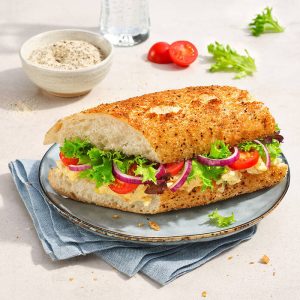
World Bread Day celebrates the tradition, quality, and convenience of millers

Every year on October 16th, World Bread Day is celebrated in conjunction with World Food Day, providing a moment to honour one of the world’s most ancient and symbolic foods.
As a foundational element of the nutritional pyramid and the Mediterranean diet, bread’s influence on global culture and daily nourishment remains profound.
According to Italmopa – Associazione Industriali Mugnai d’Italia (Italian Millers’ Association), bread is a cultural treasure that requires active promotion, particularly in Italy where consumption has declined. The nation boasts over 200 types of regional bread, a testament to its heritage, including five IGP (Protected Geographical Indication) varieties and three PDO (Protected Designation of Origin) varieties:
IGP Breads: Coppia Ferrarese, Pane casareccio di Genzano, Pane di Matera, Piadina Romagnola, and Sudtiroler Schuttelbrot.
PDO Breads: Pagnotta del Dittaino, Pane di Altamura, and Pane Toscano.
The core of this essential food — flour or semolina from soft wheat, durum wheat, or other cereals — has always been paramount to the Italian milling industry, which is recognised as a European leader in producing flour from the selection and processing of the best wheat varieties.
Francesco Vacondio, president of Italmopa’s Soft Wheat Mills Section, noted, “World Bread Day is an opportunity to celebrate a food that has been a key part of our diet since ancient times, a universal symbol of nourishment, but also of tradition, quality and conviviality”. He stressed that bread is rich in vital nutritional properties and that its excellence is ensured by the work of Italian millers.
The Italian milling sector comprises 190 mills that process over 5.8 million tonnes of soft wheat annually, yielding approximately 4.3 million tonnes of flour. A significant 58% of this output (about 2.4 million tonnes) is dedicated to the production of bread and substitute products.