Goodbye pull-tabs: Ecocap’s easy peel opening cuts costs
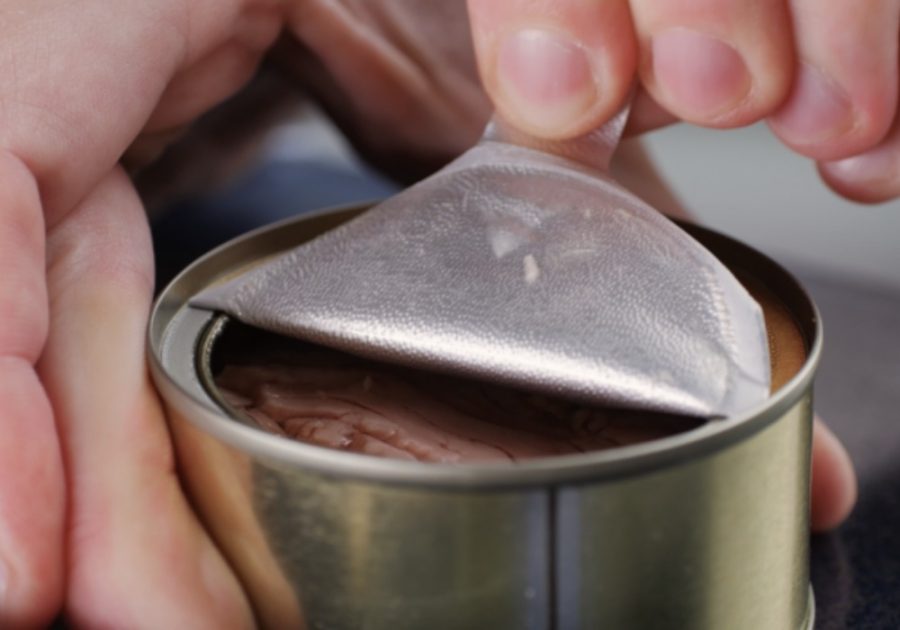
Italian packaging pioneer Ecocap’s has officially unveiled a patented easy peel opening system for food cans designed to permanently replace traditional metal pull-tabs and scored lids.
FOODSYL, which made its global debut at METPACK, the premier international trade fair for metal packaging in Essen, is engineered to address the food manufacturing sector’s critical need for cost reduction, enhanced hygiene, and simplified recycling, FOODSYL swaps out rigid metal rivets and stay-on-tab lids for a highly efficient, heat-sealed aluminium foil system.
Overcoming the limits of traditional canning
For decades, the food canning industry has relied on traditional easy-open ends (EOEs). However, as food manufacturers face mounting pressure to reduce production costs and improve their environmental profiles, the structural limitations of conventional pull-tabs have become increasingly problematic.
Traditional systems require high-precision manufacturing, drive up material costs, and pose safety hazards for consumers handling sharp metal edges. They also present contamination risks along the supply chain and feature rigid lid rings that make it difficult for consumers to smoothly extract products like tuna or pet food.
FOODSYL eliminates these drawbacks entirely. By replacing the complex scored steel or aluminium lid with a robust, heat-sealed aluminium foil, the system delivers a completely flat, consumer-friendly, “easy-peel” entry point.
Enhancing industrial efficiency and reducing costs
For high-volume food processors, the financial and operational incentives of the FOODSYL system are substantial.
Designed for high-speed, high-volume lines, the technology is fully compatible with existing industrial canning infrastructure and is scalable across major food categories — including tuna and seafood, legumes, tomato-based products, soups, ready meals, and pet food.
By eliminating the pull-tab and rigid lid structure, manufacturers can expect:
Lower packaging costs: significant reduction in metal material usage per can.
Streamlined production: manufacturing lines adopting FOODSYL can eliminate a seaming machine, simplifying the overall packaging process.
Logistical optimisation: the flat profile of the foil-sealed cans allows for superior stackability, maximising pallet space and cutting transportation emissions throughout the distribution chain.
Safety, hygiene, and consumer safety
The heat-sealed foil acts as a total hermetic barrier, ensuring product integrity from the factory floor to the consumer’s kitchen. Without exposed metal rivets or scored grooves, the risk of micro-fissures and post-process contamination is dramatically reduced.
When it is time to consume, the user experience is vastly improved. The smooth peel-back motion eliminates the physical strain of pull-tabs and removes the risk of cuts from jagged metal edges.
A new canvas
Beyond functional and financial advantages, FOODSYL introduces a fresh branding opportunity. Unlike traditional anonymous metal lids, the aluminium foil on a FOODSYL can is fully printable. This allows manufacturers to use the top of the can for vibrant, customisable branding, nutritional callouts, or promotional messaging, vastly improving on-shelf distinction.
Bringing consolidated know-how to the food sector
The launch represents an expansion of Ecocap’s established sealing expertise, translating technologies like TOPSYL (for beverage cans) and KEGSYL (for industrial kegs) into the food processing market.
Jacopo Cassoli, general manager of Ecocap’s, commented on the strategic launch: “With our patented FOODSYL packaging system we bring a concrete innovation to the food sector that responds to three key industry needs: efficiency, safety, and sustainability. The elimination of the pull tab and the adoption of heat-sealed foil simplify packaging and improve performance along the entire supply chain, transforming a traditional component into a true driver of industrial innovation.”