Securikett targets tray sealing with multifunctional label

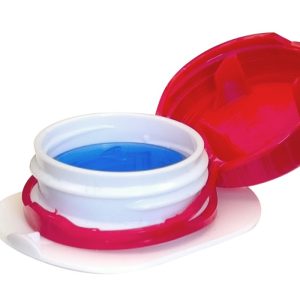
Securikett structure with green coating and VOID-effect on a plastic cup.
Securikett has developed a new label-based closure system designed to replace conventional heat sealing on tray and cup packaging, combining tamper evidence, functionality and automated application in a single solution.
The Austrian packaging technology specialist says its new system could provide food and drink manufacturers with an alternative to traditionally welded tray lids, using a multifunctional label to secure the pack without heat.
The technology brings together several components within one label, including structured adhesive coatings, integrated VOID technology, precisely applied silicone coatings and customised die-cutting. According to Securikett, the combination is intended to deliver packaging security while also allowing functional features to be incorporated into the label design.
Closing the tray without heat
At the heart of the development is a different approach to tray closure. Rather than heat-sealing a lid to the tray, the label itself provides the secure closure.
The label can be automatically applied using existing labelling or dispensing equipment, potentially allowing manufacturers to integrate the technology into automated packaging operations without introducing a conventional heat-sealing process.
For food and drink processors, that could make the technology particularly relevant to applications where manufacturers are looking to simplify packaging operations, reduce process steps or avoid the use of heat during final pack closure.
Securikett says the system also provides an immediate indication of interference. Its integrated VOID effect is designed to reveal if the package has been opened or tampered with, adding a security function to what would otherwise be a conventional labelling operation.
One label, multiple functions
The system is not limited to closure and tamper evidence. Securikett says ventilation holes and viewing windows can also be incorporated directly into the label through customised die-cutting.
That could give packaging designers greater scope to combine several requirements within a single component rather than adding separate seals, labels or functional elements.
“We have combined multiple technologies so that they work together within a single label,” said Vanessa Mitterer-Kling, head of research and development at Securikett.
She added that the approach is designed to be tamper-evident while also being capable of integration into existing production processes.
The company points to established use of tamper-evident labelling in areas such as cash transport pouches, but says its latest development brings similar security mechanisms to tray and cup packaging.
What it means for manufacturers
The development reflects a broader shift towards packaging components that perform several functions simultaneously. Instead of treating the label simply as a branding or information carrier, Securikett is positioning it as part of the pack’s physical closure and security system.
For manufacturers, the potential benefits extend beyond removing a heat-sealing operation. Automated application could allow the closure to be incorporated into existing labelling infrastructure, while the integrated tamper-evident feature provides an additional security layer.
The ability to incorporate ventilation openings and viewing windows could also be relevant to food applications where pack functionality needs to be balanced with product visibility or controlled airflow.
The company describes the resulting solution as safer, faster and more cost-efficient than traditional heat-sealing processes, although those performance and cost benefits will ultimately depend on the specific packaging format, application and production line.