High-protein food patents hit record
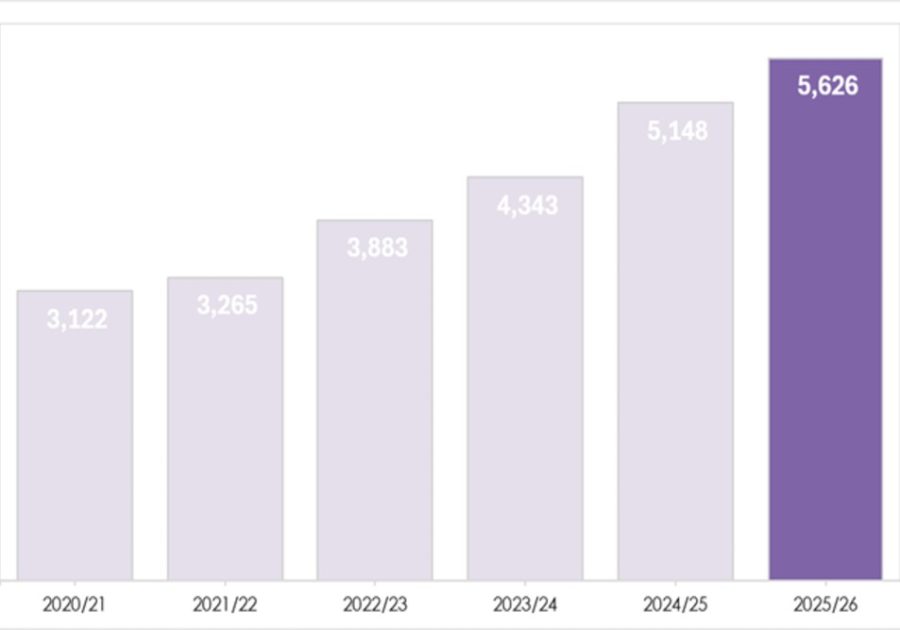
Global patent applications for high-protein food technologies reached 5,626 in the year to June 2026, as manufacturers explore new ways to enrich everyday products without compromising taste, texture or appearance.
Food manufacturers are accelerating efforts to increase protein content across a wider range of products, with global patent applications for high-protein food technologies rising to a record 5,626 in the year to 30 June 2026.
Research by intellectual property law firm Mathys & Squire, based on data from the World Intellectual Property Organization’s PATENTSCOPE database, shows filings increased from 5,148 in the previous year. The latest total represents an 80% increase on the 3,122 applications recorded in the year to June 2021.
The figures reflect growing interest in protein-enriched foods as manufacturers respond to changing consumer preferences and seek new opportunities to extend the nutritional positioning of established products.
Protein moves beyond specialist nutrition
Demand for high-protein foods has traditionally been associated with weight management and muscle development. However, the category is increasingly influencing innovation across mainstream food and drink, creating opportunities to incorporate additional protein into products not normally associated with high-protein nutrition.
According to Michael Stott, partner at Mathys & Squire, manufacturers are seeking ways to increase the protein content of established bestsellers while preserving the characteristics consumers recognise.
That presents a formulation challenge: increasing protein levels without adversely affecting flavour, appearance or texture.
Stott said techniques initially developed for meat alternatives are now being applied to a broader range of high-protein foods, illustrating how existing food technology research can support innovation in other categories.
New approaches to protein enrichment
Patent applications published during the research period included a range of approaches to protein enrichment.
Examples cited by Mathys & Squire include whey microparticles for high-protein pastry dough, plant-based whipping cream containing more than twice the protein of conventional whipping cream, and microbial protein ingredients intended for industrial confectionery.
Another example is a ready-to-drink high-protein beverage designed to replicate the smell, texture and flavour of milk.
The range of applications highlights the challenge facing developers: protein enrichment is not simply a matter of adding more of an ingredient. The resulting product must still deliver the functionality, sensory qualities and performance expected by consumers and manufacturers.
Alternative protein sources, including plant and insect proteins, are also being explored as companies investigate new ways to achieve their formulation objectives.
Major manufacturers build their technology portfolios
Nestlé, Cargill and Arla were among the leading patent filers identified in the research, with 58, 46 and 28 applications respectively.
For food manufacturers, patent activity can help protect new formulations and processing approaches, potentially supporting product differentiation and future commercial development.
Stott said intellectual property generated through this research could become a significant component of food companies’ valuations over time.
However, patent filings do not necessarily indicate that a technology has reached commercial production. The figures instead provide an indication of where companies are directing inventive activity and seeking to establish technological advantages.
From consumer demand to manufacturing performance
The growing number of patent applications suggests protein enrichment is becoming a broader product-development priority rather than remaining confined to specialist nutrition.
For manufacturers, the next challenge is translating new technologies into commercially viable products that retain their expected sensory characteristics and can be produced consistently at scale.
The extent to which these innovations reach the market will depend on factors including ingredient functionality, formulation requirements, production compatibility and consumer acceptance.
Source: Mathys & Squire research using WIPO PATENTSCOPE data. Patent applications published between 1 July 2025 and 30 June 2026.