Breaking the bias
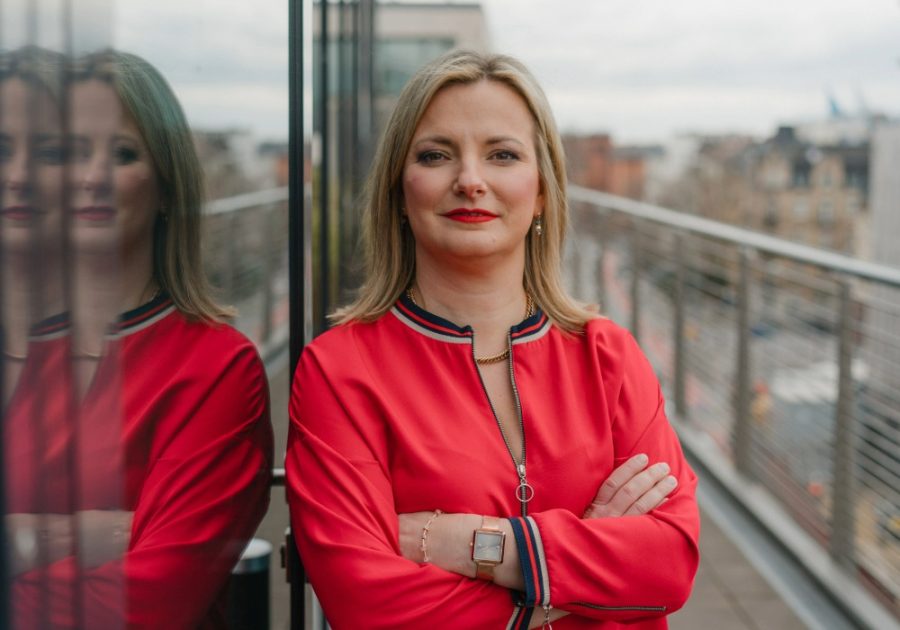
Katrin Turvey, VP head of food & beverage key accounts and engineering, Kersia.
For all the progress the food supply chain has made on diversity, the same question remains: if businesses know balanced teams perform better, why are so many still built in ways that make it harder for women to enter, stay and lead?
The latest global gender gap score shows that 68.8% of the gap has been closed (source: Global Gender Gap Report 2025, World Economic Forum, 2025) but progress is being held back by weak female employment. This is despite the benefits a gender-balanced team can have, from better decision making to improved workplace culture, and closer connections with customers.
If there is one woman and nine men in a team, that woman can often have little to no influence. But when critical mass is achieved (30% females or more – (Critical Mass on Corporate Boards: Why Three or More Women Enhance Governance, 2006 Kramer, V. W., Konrad, A. M., Erkut, S.)), I see decisions being questioned, opinions being voiced and the status quo challenged.
When everyone around the table brings the same perspective, decisions may feel easier, but they are rarely better. Diversity adds a layer of complexity which many businesses are seemingly afraid of, but crucially, supports business performance.
Different regions, familiar barriers
Whatever the size or location of a business, gender imbalance stems from how a company positions itself; not from the tired excuse that ‘there aren’t any women’ for these roles.
The challenge is that the barriers facing women are not identical everywhere.
Europe, for example, has made meaningful progress on gender equality in the workforce, but that progress does not always extend into leadership in the same way as regions such as North America.
In parts of Asia, female leaders do exist, but broader societal attitudes do not always align. In South America, more traditional expectations can still weigh heavily on progression.
The regional landscape is mixed but one theme remains remarkably consistent: childcare.
I genuinely believe the food supply chain needs to stop treating gender imbalance as a pipeline problem alone.
Too often, companies claim ‘there aren’t any women’, when the real issue is how roles are presented, how interviews are run and how talent is judged. If an organisation has spent years successfully recruiting men, it cannot expect to achieve a more balanced team using exactly the same hiring methods.
At the more practical and production-based stages of the supply chain, any reference to flexibility still remains largely taboo. For those who spend a lot of time caring for others – which across the world, continues to be mostly women – the language used around roles can immediately become limiting. Women are often conditioned to think about their needs, not their wants, and that alone can narrow the opportunities they consider.
The industry also needs to accept less straightforward CVs. There may be gaps in women’s careers, or times where they have tried something new. That should not count against them. If businesses only look for the perfect linear CV, they risk overlooking very capable people.
Foundations for progress
Independent of region, visibility is key. If a business does not employ many women, those they do have need to be visible – whether that’s on stage, in meetings, or on social media. And that applies not just to employees, but also to the wider network of suppliers, partners and organisations associated with the business. When women are visible, others will be drawn in.
In my own journey to becoming a female leader, I had supportive managers early in my career who saw my potential. Leaders who treat recruiting women as business as usual, rather than a target, naturally attract more women in. The talent so many businesses claim is hard to find, finds them.
In an industry as established as food manufacture, women’s progression can still be shaped by day-to-day management. Leadership ethos and environment are what separate meaningful change from box-ticking.
As a mum, I am also distinctly aware of the role early education plays. Young girls are too often told that they are not good at MENT (maths, engineering, natural science and technology) subjects. That immediately undermines confidence and can remove any intention of pursuing careers linked to those areas – narrowing the future talent pool, before it has even begun.
Across every region, there are opportunities for progress. But businesses have to create environments where women can see a place for themselves, and women have to invest in themselves.
If meaningful progress is to continue, the global food supply chain must move beyond simply talking about female talent and start creating conditions in which it can thrive.