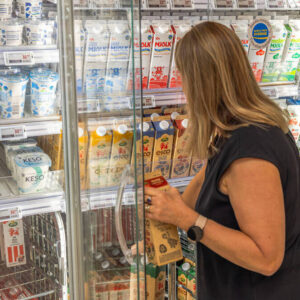
Tetra Pak and Mega Image launch Europe’s first major carton recycling trial

In a significant move to boost recycling rates in Central and Eastern Europe, Tetra Pak and retailer Mega Image have launched an eight-month pilot programme in Romania aimed exclusively at collecting used beverage and dairy cartons.
The initiative, a collaboration with partners Maspex, Tomra, and Brai Cata, is the first large-scale project of its kind in Europe to focus solely on recovering cartons using reverse vending machines (RVMs). The main goal of the trial is ambitious: to collect one million cartons across the Romanian cities of Bucharest and Brașov over the eight-month period.
Seven RVMs have been deployed in selected Mega Image stores (six in Brașov and one in Bucharest), offering residents a streamlined and rewarding way to recycle. For every carton returned — regardless of brand or manufacturer — consumers receive a voucher worth 0.5 RON (approximately €0.10/US$0.11), redeemable throughout the Mega Image network.
The pilot specifically addresses a gap in Romania’s current recycling infrastructure, where beverage cartons are often grouped with general paper and cardboard, leading to lower recovery rates for the composite material.
Adela Elsie, sustainability director at Tetra Pak for Central and Eastern Europe, commented that the initiative is designed to gather vital data on consumer participation. “Initiatives like this bring recycling closer to everyday shopping routines,” Elsie said, adding that the programme would guide broader system improvements.
Mihai Popescu, environmental manager at Mega Image, noted the role of the incentive system. “The voucher system encourages immediate action from shoppers, turning waste into a small reward,” he stated.
To be accepted, cartons (up to two litres in volume) must be empty, clean, uncrushed, have a visible barcode, and retain the cap. The collected materials are then sorted by Brai Cata and channelled into certified recycling streams where the paper fibres, polymers, and aluminium are separated and transformed into new products like cardboard boxes and tissues.
The data collected over the next eight months will be crucial for partners in evaluating the trial’s success and determining whether to maintain the current scale or expand the RVM network nationwide, potentially setting a new blueprint for carton recycling across the region.