Denmark cultivates a new seaweed-powered food industry

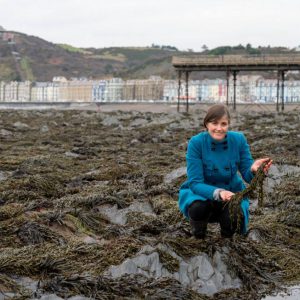
Teis Boderskov, Aahus University, harvests sugar seaweed at the Vesterhav Syd wind farm in May 2026, as part of the Win@sea project. The partners in the project are: Aarhus University, Vattenfall, Kerteminde Seafarm, DTU Aqua, Kattegat Center and the University of Copenhagen.
A new Danish food industry is emerging in an unexpected place: between the foundations of offshore wind turbines, where researchers have demonstrated that seaweed can be grown efficiently, sustainably and at commercial scale.
According to new findings from Aarhus University Technical Sciences, the technology is now proven — and the next step is building the market that can bring seaweed from the North Sea to consumers’ plates.
For more than 15 years, Danish researchers and industry partners have refined methods for cultivating sugar kelp in open waters. Trials show the crop thrives in Danish conditions, grows in high volumes and absorbs nutrients from the marine environment as it develops.
With Denmark planning a historic expansion of offshore wind capacity by 2030, scientists argue that these vast marine energy zones can double as multi‑use production areas for both renewable power and food.
“We have the technology ready. We are ready to grow at large scale. What we need now are partners who can take and use the products we can produce,” said Annette Bruhn, senior researcher at Aarhus University’s Department of Ecoscience.
A multi‑use model for the future
The concept — known as multi‑use — allows several industries to share space, infrastructure and operational resources at sea. Instead of building new aquaculture sites, seaweed lines can be installed between existing wind turbines, reducing environmental impact and lowering costs.
“We are not taking new areas into use. We are using areas already designated for something else. At the same time, we can share infrastructure, service vessels and a range of operational tasks,” Bruhn explained.
Researchers say offshore conditions may even outperform coastal sites. Strong water exchange and stable environmental conditions have delivered high yields, strong quality and greater nitrogen removal than expected. “The North Sea appears to be one of the most promising cultivation environments we have worked with,” Bruhn added.
A climate‑friendly crop with multiple uses
Seaweed requires no agricultural land, fertiliser or irrigation. It grows using sunlight and naturally occurring nutrients, and when harvested, those nutrients are brought back to land. The biomass can be used for food, ingredients such as gelling agents or antioxidants, animal feed, or biomaterials including plastics, textiles and insulation.
While seaweed farming is not a replacement for reducing nutrient pollution at source, Danish trials show it can help remove nitrogen and phosphorus already present in the marine environment — while producing valuable raw materials.
Industry engagement now critical
Modelling suggests that even limited use of offshore wind areas could generate significant volumes of seaweed and other marine raw materials, enough to support new value chains in food, feed and biorefining. But production alone will not create a market.
“We need food producers and retailers on board. We need meal‑kit companies, canteens and school kitchens. They are the ones who help shape Danish eating habits,” Bruhn said. She compared the opportunity to the rise of legumes in Danish food culture: “Five to ten years ago, legumes were far less visible in most canteens. Today they are a natural part of many meals. We want to see the same development for seaweed.”
Topics
antioxidants biomaterials gelling agents seaweed
PeopleOrganisationsAarhus University Technical Sciences
Regions