Bühler’s Lucent cocoa processor protects margins
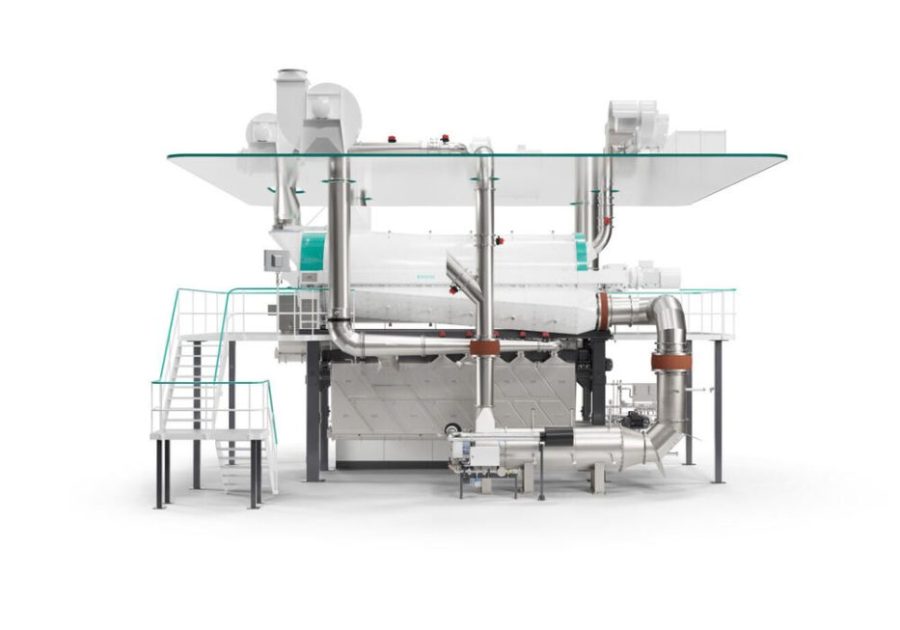
Swiss engineering giant Bühler Group has unveiled its latest innovation: the Lucent industrial cocoa nib roaster.
Promising a significant technical leap forward, the new machinery cuts energy consumption by at least 20% while boosting throughput by 20% within the exact same physical plant footprint. With a prototype slated for deployment at an Asian processing site in early 2027, the launch signals a direct engineering assault on a sector currently under siege from structural macroeconomic headwinds.
Market pressures and legislative shifts
The timing of this roll-out is highly strategic. Cocoa processors worldwide have been heavily buffeted by intense raw material price volatility, soaring baseline utility expenses, and rapidly eroding profit margins. Energy typically accounts for 10% to 20% of a processing facility’s total operating expenditures, with thermal roasting marking the most intensive utility bottleneck in the chain.
Simultaneously, the regulatory floor is shifting. Global regulatory bodies are steadily tightening food safety and hygiene standards. Manufacturers can no longer rely on superficial operational workarounds to clear inspection; hygiene and containment must be fundamentally baked into the equipment’s core physical architecture.
Inside the tech
Bühler’s product development relies on sustained, aggressive capital allocation, with the group consistently dedicating up to 5% of its annual turnover — which reached CHF 2.8 billion in 2025 — directly to research and development.
Manufactured at the Appenzell center of excellence, the Lucent replaces legacy batch-venting mechanics with a completely enclosed chamber that isolates cocoa from combustion air.
“Food safety standards in the cocoa and chocolate industry are tightening, and our customers need equipment that meets those standards structurally,” noted Joachim Essig, Bühler’s head of sales for cocoa & malt.
Additionally, the machine leans heavily on algorithmic automation. A self-learning control system continuously monitors and automatically balances airflow and burner temperatures. This transitions roasting away from an art dependent on raw operator intuition into a highly repeatable science. “Lucent enhances flavour control while reducing energy use,” stated product manager Isabelle Kirckof, emphasising that specialised hybrid configurations can push utility savings as high as 40%.
Smart infrastructure wins the long game
From an industry pulse perspective, Bühler’s heavy deployment of predictive automation addresses the growing global deficit of specialised manufacturing labour.
By embedding decades of empirical roasting expertise directly into software feedback loops, the processing sector can successfully de-risk human variables while simultaneously chasing aggressive sustainability benchmarks.
As manufacturers navigate a brutal operating environment, shifting capital toward smart infrastructure that systematically drops marginal energy costs is a baseline survival strategy.