Beyond the bean
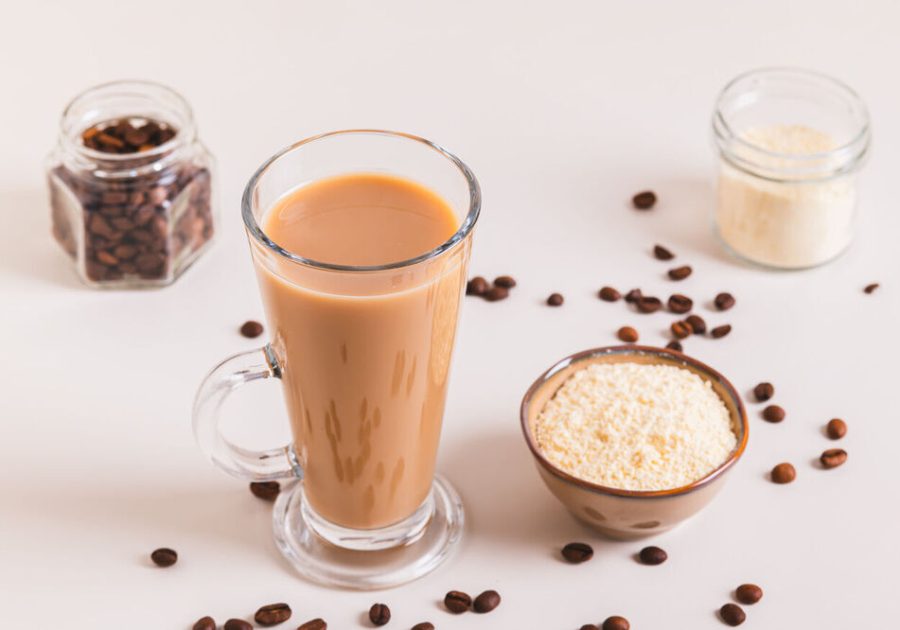
The rise of functional coffee alternatives is about more than replacing caffeine. It reflects a fundamental shift in how beverage manufacturers are approaching formulation, sensory design and product development.
As consumers seek drinks that combine health benefits with an authentic coffee experience, developers are balancing functional ingredients, flavour architecture and scalable manufacturing to create an entirely new generation of beverages.
Coffee has long been the world’s default energy drink, but changing consumer priorities are creating opportunities for a new generation of functional beverages that deliver more than a caffeine boost.
Sleep quality, stress management, cognitive performance and ingredient transparency are reshaping purchasing decisions, prompting consumers to look beyond traditional coffee towards products that better support their lifestyles. Rather than abandoning the daily coffee ritual, many are searching for beverages that replicate the sensory experience of coffee while delivering targeted health benefits with significantly lower caffeine levels.
For food and beverage manufacturers, this represents far more than a niche wellness trend. It is creating a new product development challenge where formulation science, sensory expertise and manufacturing capability must work together to satisfy increasingly sophisticated consumer expectations.
A global trend gathering momentum
Demand for coffee alternatives is no longer confined to specialist health retailers.
Laboratoire PYC, which has more than 40 years’ experience developing powdered functional beverages, identifies coffee alternatives as one of the fastest-growing categories within the functional beverage sector. Consumers are increasingly seeking drinks that provide energy, focus, cognitive support or relaxation while reducing caffeine intake.
Aurélie De Schuyteneer, marketing & communications manager at Laboratoire PYC, says the trend is being driven by several distinct consumer groups.
“We see demand coming from several consumer groups. Younger consumers are leading the way. For instance, in the UK, 60% of 16–34-year-olds want more energy drink options in coffee shops, signalling strong demand for functional beverages in coffee-led occasions.” She adds that consumers reducing caffeine intake increasingly want alternatives that maintain the experience of coffee without compromising on taste, while functional ingredients such as ashwagandha, ginseng and reishi are helping drive demand for naturally energising beverage concepts.
Although Europe has a long history of coffee substitutes through ingredients such as chicory, she believes today’s movement is global.
“The trend is global, although Europe has a particularly strong heritage in coffee alternatives through ingredients such as chicory,” she explains, noting renewed consumer interest in caffeine-free and plant-based beverage alternatives.
The challenge is no longer replacing caffeine
Developing successful coffee alternatives is proving considerably more complex than simply removing caffeine.
Consumers still expect the warmth, aroma and satisfaction associated with their daily coffee ritual, meaning product developers must recreate the complete drinking experience while incorporating functional ingredients that support wellbeing.
As Laboratoire PYC notes, today’s formulations increasingly combine botanicals, mushrooms and adaptogens such as matcha, Lion’s Mane, rhodiola, ashwagandha and reishi with more traditional roasted ingredients including chicory and barley. In beauty-focused products, collagen peptides are also becoming more common.
The objective, however, extends beyond ingredient selection.
“A successful coffee alternative relies on a balanced sensory architecture,” says De Schuyteneer. “The challenge is not only to recreate roasted, toasted, cocoa and caramelised notes, but also to control bitterness, astringency and lingering aftertaste. Others choose to create an entirely new sensory ritual. Beyond aroma, mouthfeel and flavour evolution are key to delivering a satisfying experience. At Laboratoire PYC, we recreate this complete sensory signature through precise flavour design.”
There is no single winning ingredient
Despite the growing popularity of ingredients such as matcha and medicinal mushrooms, De Schuyteneer believes successful products rely on carefully balanced formulations rather than individual hero ingredients.
“There is no single winning ingredient,” she explains. “Successful coffee replacers combine complementary ingredients such as roasted chicory, cereals and cocoa to build roasted complexity, while fibres and botanicals contribute to texture or functional positioning. The key lies in the interaction between ingredients and flavour architecture, creating a balanced profile with depth and persistence.”
This reflects a broader trend across food and drink manufacturing, where ingredient functionality is increasingly judged by how effectively components work together rather than their individual claims.
From laboratory to production line
While consumer trends may inspire new concepts, commercial success ultimately depends on whether formulations can be manufactured consistently at scale.
According to Laboratoire PYC, this is where many functional beverages face their greatest challenges.
“Solubility, ingredient interactions, flavour stability and powder flow all become critical,” says De Schuyteneer. “A formulation that performs perfectly in the laboratory may require significant optimisation before being ready for industrial-scale production.”
The company says expertise in clean-label formulation and flavour design is essential to ensuring products maintain their performance from concept through to industrial manufacture.
This focus on manufacturability illustrates how beverage innovation increasingly depends on collaboration between formulation scientists, flavour specialists and production engineers.
Function alone is not enough
As functional beverages become more sophisticated, nutritional benefits alone are unlikely to guarantee repeat purchases.
De Schuyteneer believes the industry has reached a point where sensory quality carries equal weight.
“They are equally important,” she says when asked about the balance between nutrition and taste. “Functional benefits may encourage consumers to try a product, but sensory experience is what creates loyalty. Ultimately, successful functional beverages are those where consumers no longer feel they have to choose between health and enjoyment.”
The observation mirrors wider developments across food manufacturing, where healthier formulations increasingly succeed only when consumers perceive little or no compromise in flavour, texture or overall eating experience.
Looking beyond coffee
Although coffee alternatives currently represent one of the sector’s fastest-growing opportunities, Laboratoire PYC expects similar innovation principles to influence other beverage categories.
Energy remains the dominant functional claim globally, while interest is also growing around cognitive performance, gut health, immunity and reduced-sugar products. The company has extensive experience in reduced-sugar formulations and is increasingly using monk fruit to develop functional powdered beverages.
Looking ahead, De Schuyteneer identifies two particularly significant developments.
“Beyond coffee replacers, we are closely following beverage innovations linked to GLP-1 therapies. These treatments are reshaping consumer expectations, creating demand for nutrient-dense beverages with excellent sensory quality in smaller formats. As appetite decreases, every sip counts, making flavour intensity, mouthfeel and overall drinking experience just as important as the functional benefits.”
She also expects powdered beverages to become an increasingly important innovation platform.
“Powdered beverages are gaining strong momentum, especially in sports nutrition and everyday hydration. As consumers increasingly seek convenient ways to turn plain water into functional drinks, powder formats are creating new opportunities for innovation.”
A blueprint for future beverage innovation
The emergence of coffee alternatives highlights a broader transformation taking place across the beverage industry. Manufacturers are no longer simply responding to demand for reduced caffeine; they are designing products around holistic consumer expectations that combine health, convenience and sensory satisfaction.
For product developers, the challenge is becoming increasingly multidisciplinary. Success depends not only on selecting the right functional ingredients, but also on mastering flavour architecture, ensuring manufacturing scalability and delivering an experience that consumers genuinely enjoy.
As the boundaries between nutrition, wellness and beverages continue to blur, coffee alternatives may prove to be less of a standalone category and more of a blueprint for the next generation of functional drink innovation.
Topics
beverages caffeine clean label flavours formulation functional coffee Functional ingredients GLP-1
PeopleOrganisations