
The reseal deal for fibre trays
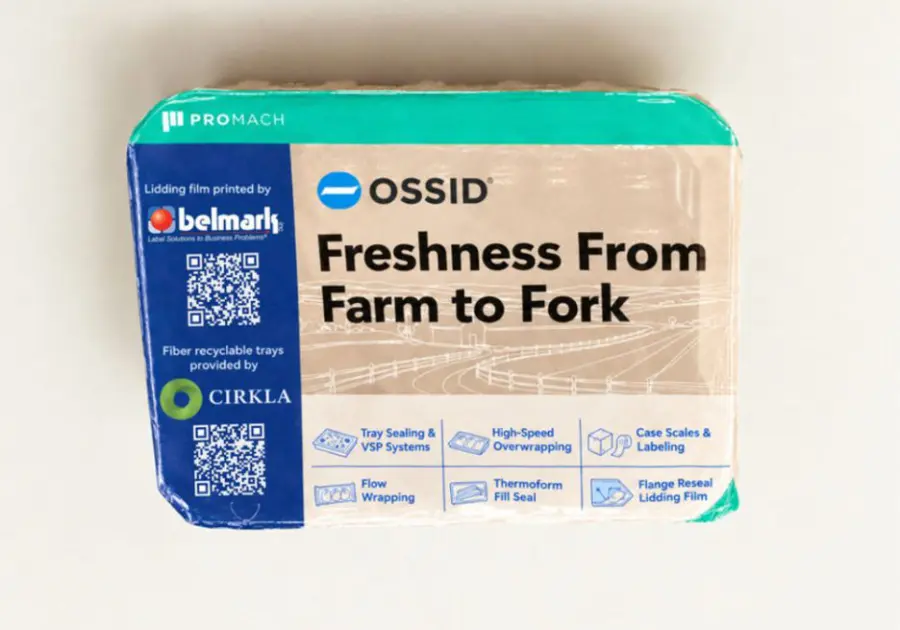
Cirkla, Belmark and Ossid have launched what they describe as the world’s first resealable fibre tray packaging solution, pairing high-performance fibre trays with peel/reseal lidding film and automated sealing technology across fresh protein, produce, ready meals and other food applications.
Announced on 12 October from Gainesville, Georgia, the integrated system brings resealable lidding film to fibre trays for the first time, a combination the three companies say the packaging industry has never seen at commercial scale. It made its public debut at The Global Produce and Floral Show in Orlando (14–16 October) and Pack Expo in Chicago (18–21 October).
The gap in fibre’s armour
Peel/reseal functionality is something consumers expect, but according to the partners it has been the exclusive domain of rigid plastic. The reason, they say, was not that plastic was the right answer, but that nobody had cracked the technical challenge of bonding a resealable film to a fibre substrate without compromising the tray’s liner.
Andrew Birdwell, vice president of sales at Ossid, framed the breakthrough as a collaborative one. “Together with Belmark and Cirkla, we solved a long-standing challenge: pairing a fiber-based tray with a peel/reseal lidding film without damaging the tray’s liner,” he said. The result, he added, is a package that “performs on the line, stands out on the shelf, and helps our customers reach their sustainability goals.”
Three partners, three pieces
Each company supplies a distinct part of the puzzle:
Cirkla provides the moulded fibre trays, which it says meet or beat plastic on shelf life, barrier properties and durability while reducing plastic waste by up to 90%. The trays have been proven in production with some of the largest retailers and protein processors in the US, and are validated on all major US tray sealers, including Ossid’s, with no capital investment or line changes required.
Belmark supplies the resealable lidding film, described in the announcement as the missing piece that makes resealable fibre packaging possible at commercial scale. “Bringing resealable functionality to a fiber tray required expertise across materials, film, and equipment, and each partner played an important role,” said Jason Vandeloo, director of business development at Belmark.
Ossid, North American distributor of Reepack and a ProMach product brand, contributes the ReeMaster NextGen Automatic Tray Sealer. Built for medium to large-scale production, it combines servo-driven indexing conveyors and side grippers for consistent tray positioning with a stainless steel, washdown-ready, open-frame design for fast, tool-free cleaning. Its 12-inch colour touchscreen offers recipe management for quicker changeovers between top-seal, Modified Atmosphere Packaging (MAP) and Vacuum Skin Packaging (VSP) formats.
Supply behind the story
Cirkla’s first US manufacturing facility is set to begin operations in Gainesville, Georgia in Q1 2027, adding domestic capacity to its existing operations in India and the US. The company also describes itself as the first to bring molded fibre MAP trays to commercial scale, using its proprietary liner technology.
What It Means
For brands weighing a move away from plastic, the pitch is that the usual trade-offs have narrowed.
Glenn Divers, vice president of sales at Cirkla, put it bluntly: converting a single-use tray into a resealable, multi-use package “without compromising performance, cost or asking brands to change their lines” removes “every reason not to switch.” He called the launch “the inflection point for fibre packaging adoption across the industry.”
Topics
fibre tray packaging fibre trays films lidding produce protein ready-meals sealing
PeopleAndrew Birdwell Glenn Divers Jason Vandeloo
Organisations