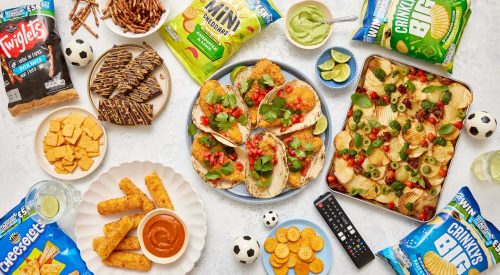
 Snack overhauls: savoury snacking titan pladis has extended its core Jacob’s Mini Cheddars portfolio with limited-edition “Chipotle & Lime” and “Nacho Cheese” profiles. This tactical launch directly capitalises on the mainstream migration of smoky Mexican spices and jalapeño-cheese combinations into Western grocery aisles.
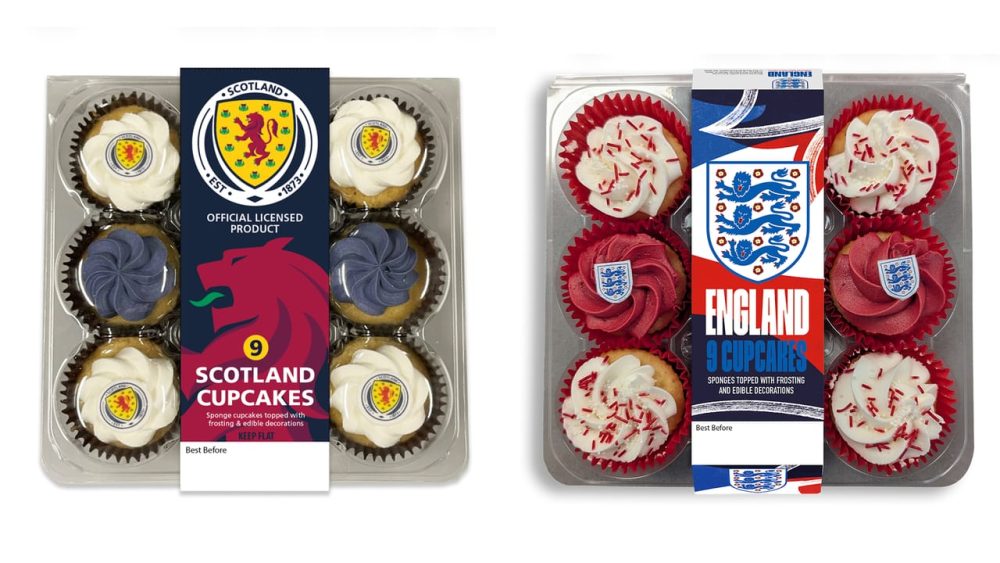 Nationalistic impulse bakes: on a localised sharing level, Finsbury Food Group secured historic dual licensing with the English Football Association (The FA) and the Scottish Football Association (SFA) to manufacture dedicated, team-specific vanilla cupcakes. Sold in shared nine-pack cartons in Tesco, these products use structural frosting geometries — like blue-and-white layouts forming the Saltire flag or red-and-white swirls with edible crests — to capture short-term, emotional impulse spend.
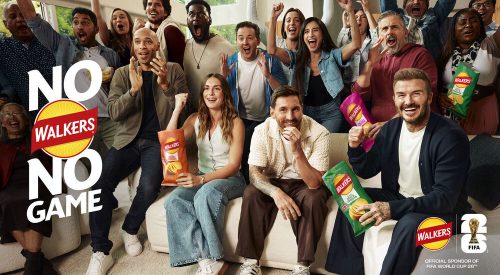 Conversational commerce & digital communities: Walkers (PepsiCo) has advanced its established “No Walkers, No Game” platform by introducing an exclusive WhatsApp Group Chat channel. This service gives fans unprecedented direct access to automated voice notes, memes, and real-time match commentary from global icons like Lionel Messi, David Beckham, and Thierry Henry. This represents a highly sophisticated shift toward building an ongoing, interactive digital community directly on a consumer’s mobile device.
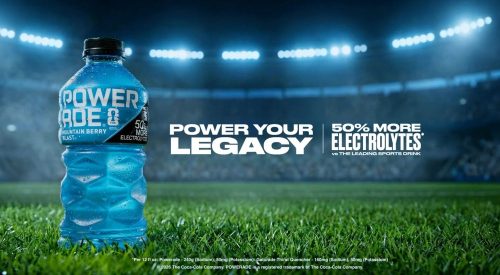 Hydration-driven upgrades: on the pitch, Coca-Cola’s Powerade brand is activating its “Power Your Legacy” platform with elite talent like Lamine Yamal and Rodrygo Goes. Beyond traditional sports drink distribution, they have integrated service and art by partnering with street portrait artist Devon Rodriguez to create custom-illustrated, collectable Powerade Squeeze Bottles that celebrate grassroots athletic preparation.
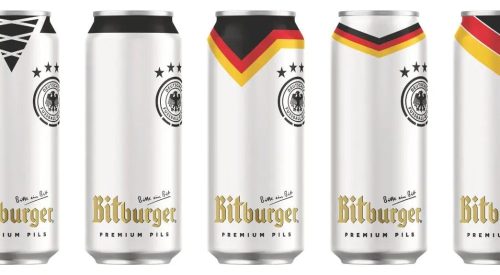 Apparel-inspired aluminium: in Germany, historic brewer Bitburger partnered with brand design agency Derek&Eric to deliver a series of collectable World Cup cans. The design mimics Germany’s famous home kits, integrating a subtle nod to the national team’s Schwarz-Rot-Gold (Black-Red-Gold) collar design on the upper lip of the can under the unifying campaign narrative, “Here’s to Number 5”.
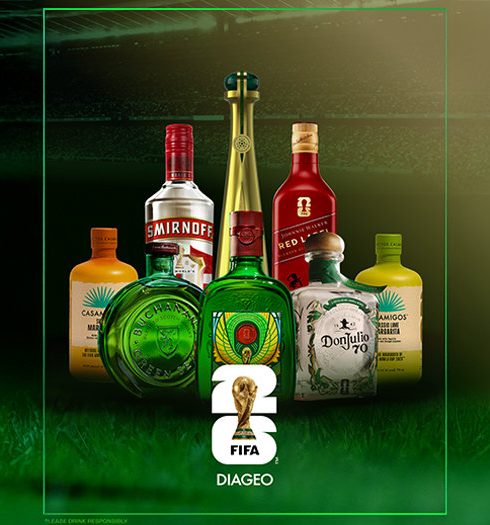 Premium spirit disruption: marking the first time a spirits producer has stepped in as an Official FIFA World Cup Supporter, Diageo is executing a premium structural overhaul across its portfolio. Tequila Don Julio has unveiled a limited-edition 1942 bottle structurally inspired by the FIFA World Cup Trophy itself, crowned with a distinct malachite closure. Simultaneously, Johnnie Walker Red Label features its iconic “Striding Man” modified to perform a dynamic bicycle kick directly on the glass.
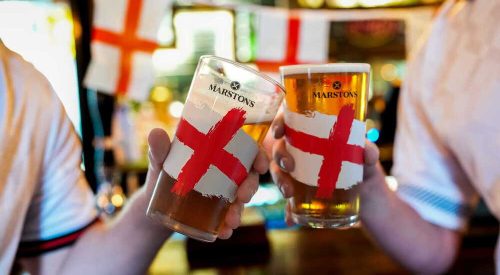 The on-trade souvenir: pub operators are using structural packaging to defend their share of the market against the at-home viewing trend. Marston’s has deployed a limited-edition run of 50,000 box-packaged, commemorative pint glasses featuring a stylised St. George’s flag design across 700 pubs. By allowing consumers to “unlock” the premium glass for £2 when buying a round, the brand creates a physical, take-home keepsake that directly ties consumer loyalty to the physical pub environment.
Fast-moving fandom: how brands are customising products, packaging, and services for World Cup 2026
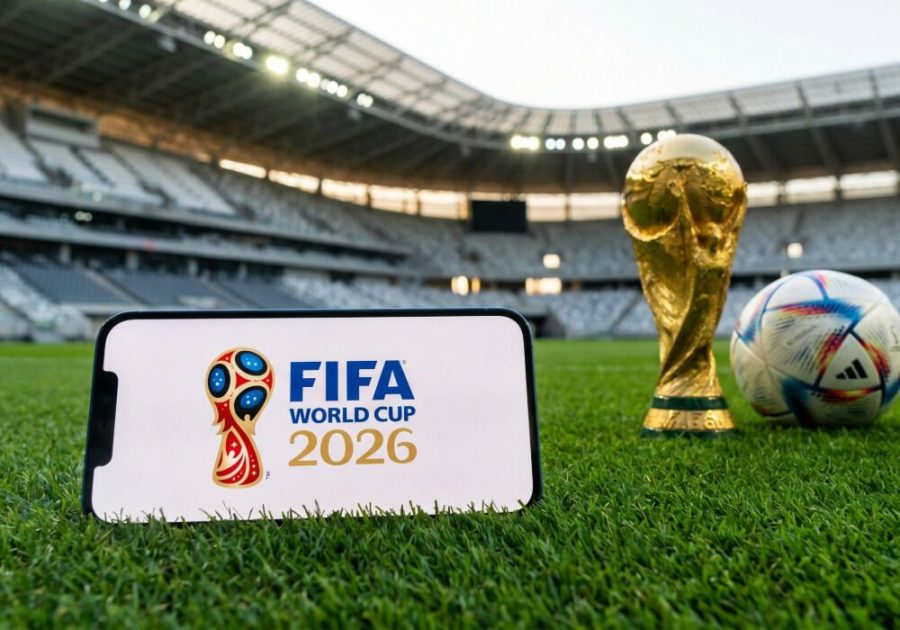
The FIFA World Cup 2026, spanning the United States, Canada, and Mexico, represents a monumental operational and commercial frontier for the global food and beverage sector.
With 104 matches played over six weeks, consumer goods giants and agile independent brands are forced to look beyond generic sponsorships. Instead, they are implementing targeted product formulations, interactive digital services, and highly sophisticated packaging to capture shifting consumer behaviours.
Analysing the current landscape reveals that brands are heavily optimising for at-home consumption, using the host nations’ culinary identities as flavour inspiration, and introducing functional solutions to navigate complex broadcasting time zones.
1. Capitalising on home viewing
Market intelligence underscores a massive shift in how fans intend to experience the tournament. According to grocery research group IGD, 36% of UK adults plan to increase their food and grocery spending to celebrate the World Cup — a substantial rise from the 23% recorded during the winter tournament in 2022. This event-led spend is dynamic and highly dependent on team progression; 39% of consumers indicate they will increase their outlays if their national team performs well, pushing total prospective tournament engagement up to 59%.
Commercial data indicates that a vast majority of this consumption is moving away from traditional hospitality venues. Market data from pladis highlights that nearly three-quarters of British consumers intend to trade the pub for the matchday sofa this summer. This baseline shift makes the living room premium real estate for FMCG manufacturers, creating an intense retail battleground for sharing-size formats, convenience-driven snacks, and impulsive celebratory bakes.
2. Harnessing host nation flavours
One of the most immediate opportunities for product development lies in product formulation that pays homage to the tournament’s North American and Mexican geography. Rather than relying solely on football-themed graphics, brands are embedding the actual culinary trends of the host region directly into their lines:
 Snack overhauls: savoury snacking titan pladis has extended its core Jacob’s Mini Cheddars portfolio with limited-edition “Chipotle & Lime” and “Nacho Cheese” profiles. This tactical launch directly capitalises on the mainstream migration of smoky Mexican spices and jalapeño-cheese combinations into Western grocery aisles.
- Dessert-inspired luxury: independent manufacturer Popcorn Shed has launched an “American-Inspired” gourmet selection featuring regional flavour profiles like Cookies & Cream, Peanut Butter, Pecan Pie, Toasted Marshmallow, and Red Velvet to bring matchday comfort to home viewers.
- Experiential foodservice retail: foodservice operators are leveraging the geographical tie-in as an experiential hook. Chipotle Mexican Grill UK introduced its first-ever nationwide matchday service offer — giving a buy-one-get-one-free main meal to any fan arriving in a football shirt on the tournament’s opening day.
 Nationalistic impulse bakes: on a localised sharing level, Finsbury Food Group secured historic dual licensing with the English Football Association (The FA) and the Scottish Football Association (SFA) to manufacture dedicated, team-specific vanilla cupcakes. Sold in shared nine-pack cartons in Tesco, these products use structural frosting geometries — like blue-and-white layouts forming the Saltire flag or red-and-white swirls with edible crests — to capture short-term, emotional impulse spend.
- The advocacy angle: in a highly creative campaign, Scottish butcher Simon Howie launched a public advocacy campaign and petition titled “Make Haggis Legal Again”. Tapping into the travel plans of the “Tartan Army” flying to the US, the campaign targets America’s 1971 federal ban on certain offal ingredients, using branded “No Haggis No Party” flags to generate grassroots consumer engagement.
3. WhatsApp and late-night functional fixes
As broadcasting schedules shift across multiple global time zones, traditional television advertising campaigns are being augmented — or entirely replaced — by high-utility services and disruptive digital engagement.
- The late-night time zone remedy: because the North American match schedules force European fans into highly disruptive, late-night viewing hours, coffee manufacturer Kenco (JDE Peet’s) has strategically positioned itself as the “Official Sponsor of Staying Awake”. This clever positioning makes a functional morning beverage into an essential late-night matchday utility for football fans pushing their sleep schedules to the limit.
- Conversational commerce & digital communities: Walkers (PepsiCo) has advanced its established “No Walkers, No Game” platform by introducing an exclusive WhatsApp Group Chat channel. This service gives fans unprecedented direct access to automated voice notes, memes, and real-time match commentary from global icons like Lionel Messi, David Beckham, and Thierry Henry. This represents a highly sophisticated shift toward building an ongoing, interactive digital community directly on a consumer’s mobile device.
- Hydration-driven upgrades: on the pitch, Coca-Cola’s Powerade brand is activating its “Power Your Legacy” platform with elite talent like Lamine Yamal and Rodrygo Goes. Beyond traditional sports drink distribution, they have integrated service and art by partnering with street portrait artist Devon Rodriguez to create custom-illustrated, collectable Powerade Squeeze Bottles that celebrate grassroots athletic preparation.
4. Packaging innovation
With billions of consumers interacting with products worldwide, premium materials and structural packaging design are proving vital to driving retail velocity and brand equity.
- Thermochromic smart packaging: Pepsi Max has launched a major retail-gamification play under its Global Football Nation umbrella, manufacturing 150,000 limited-run “Perfect Chilled” cans. The cans use smart ink technology that physically transforms the packaging colour to bright blue only when the liquid inside has reached the absolute optimal drinking temperature, incentivising consumer interaction at the point of consumption.
- Apparel-inspired aluminium: in Germany, historic brewer Bitburger partnered with brand design agency Derek&Eric to deliver a series of collectable World Cup cans. The design mimics Germany’s famous home kits, integrating a subtle nod to the national team’s Schwarz-Rot-Gold (Black-Red-Gold) collar design on the upper lip of the can under the unifying campaign narrative, “Here’s to Number 5”.
 Premium spirit disruption: marking the first time a spirits producer has stepped in as an Official FIFA World Cup Supporter, Diageo is executing a premium structural overhaul across its portfolio. Tequila Don Julio has unveiled a limited-edition 1942 bottle structurally inspired by the FIFA World Cup Trophy itself, crowned with a distinct malachite closure. Simultaneously, Johnnie Walker Red Label features its iconic “Striding Man” modified to perform a dynamic bicycle kick directly on the glass.
- The on-trade souvenir: pub operators are using structural packaging to defend their share of the market against the at-home viewing trend. Marston’s has deployed a limited-edition run of 50,000 box-packaged, commemorative pint glasses featuring a stylised St. George’s flag design across 700 pubs. By allowing consumers to “unlock” the premium glass for £2 when buying a round, the brand creates a physical, take-home keepsake that directly ties consumer loyalty to the physical pub environment.