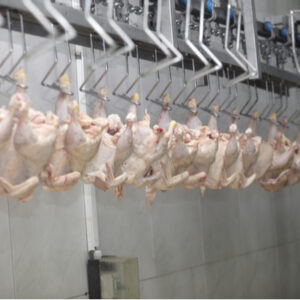
High performance tempering and defrosting
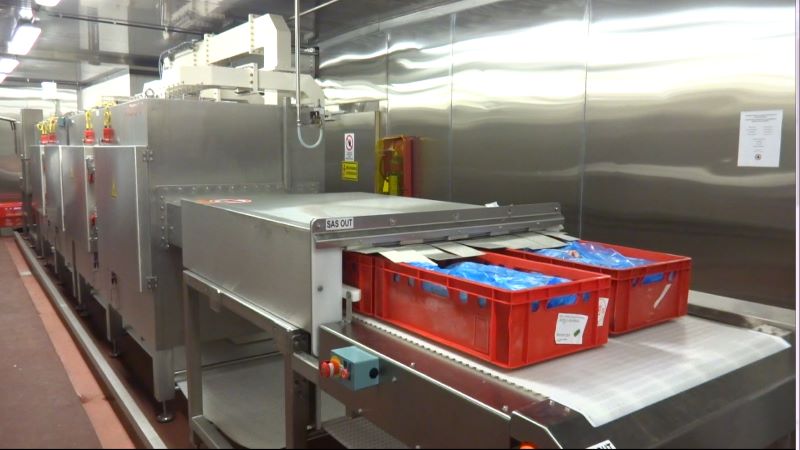
Image: Sairem
Defrosting is a fundamental process in the production of many products and poultry is no exception. Ensuring that the adopted method is safe, has no detrimental effect in terms of texture and taste, and maximises yield through avoiding drip loss are all important considerations when selecting an appropriate solution.
Delivering innovative solutions in this area is Interfood Technology, the exclusive distributor and service partner in the UK and Ireland for Sairem, a world leading manufacturer of industrial microwave (MW) and radio-frequency (RF) technologies for the food industry. For almost 50 years, Sairem has supplied MW & RF equipment to leading food processors for various applications, amongst which are a number of manufacturers of poultry products.
Frozen blocks
Central to the profitability of many poultry-based products is the capacity to buy meat cost effectively. As such it is common practice for manufacturers to purchase frozen blocks when prices are low to create a buffer stock, thereby offering economies of scale and avoiding price volatility in the meat markets. To further reduce costs these are often sourced from overseas, the top five exporters of frozen chicken being Brazil, USA, Netherlands, Thailand and Poland who were collectively responsible for 72.9% of globally exported frozen chicken meat in 2022 (source: worldstopexports.com: chicken exports by country).
A method often used to defrost these blocks is the tempering room, whereby racks are left for a period of time to allow the blocks to gradually rise in temperature, typically from -18°C to 2°C. The problem with this approach is the lack of consistency and controllability. Once the blocks reach 1°C, drip loss can occur, resulting in a significant reduction in yield (research has shown that weight loss can be up to 8%), as well as potential degradation of the product.
Volumetric heating
Microwave and RF technologies are specifically designed to improve thermal processes and to defrost, sanitise, cook, heat and dry a wide range of foodstuffs through their ability to heat quickly and uniformly. This ‘volumetric heating’ is achieved by heating the entire product mass directly, unlike conventional solutions whereby heat is transferred by convection or conduction from the outside to the centre of the product through its surface.
Microwave and RF offers full control over the defrosting process, with a typical increase from -18°C to -2°C. At this temperature the frozen blocks of chicken can then be worked in a tumbling or grinding process to bring them up to around 2°C, which retains moisture, avoids drip loss and an excessive rise in temperature. The uniformity of the product temperature throughout the food block also allows for easier post-processing of products.
Consistent process
Block sizes can vary, depending on where they are sourced, but by learning the optimum program for a given size, the process can be repeated time and time again to ensure consistency – so critical to maintaining product quality. Conventional defrosting and tempering methods take hours or even days to achieve the desired temperature while the latest in microwave and RF technologies take from 3 to 20 minutes and significantly reduce the space required. In addition to increasing capacity and throughput, this also reduces the health risk as bacterial growth is minimised, a factor which is further helped by the microwave tunnels allowing the separation of incoming and outgoing product flows to avoid cross contamination.
For those processors using IQF poultry pieces rather than blocks, the technologies remain highly effective as they are suitable for products which have an irregular shape. As well as raw poultry, they can also be used on processed products.
A further advantage of Sairem technologies is that they eliminate time wasted in unpacking products. Sairem machines allow tempering or defrosting in the original packaging, whether it is plastic film, cardboard or plastic. Also, removing close plastic packaging when meat is frozen can be difficult and these technologies allow it to be removed much easier, avoiding product contamination.
The processes also have no adverse effects in terms of organoleptic properties, preserving the colour, weight, taste, vitamins and nutrients of the food.
In summary
Microwave and RF tempering offers significant advantages over traditional chilled tempering processes: it reduces work in progress, enables easier production planning, minimises labour input, optimises factory space utilisation, increases capacity, improves post-processing workability and significantly improves yield through minimising drip loss.
Topics
industrial microwave (MW) meat poultry radio-frequency (RF) technologies seafood tempering
PeopleOrganisations