Global protein ingredients market set to break $112bn
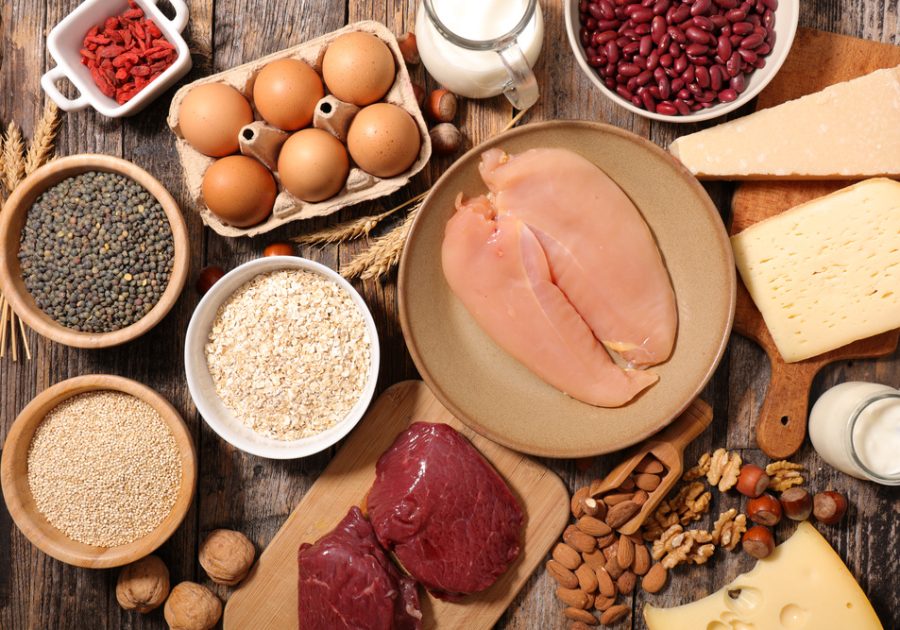
assorted food high in protein
The global protein ingredients market is entering a decade of unprecedented growth, with its valuation projected to surge from $52.8 billion in 2025 to more than $112.9 billion by 2035.
According to a new report from Global Market Insights, this 7.9% annual growth rate signals a permanent shift in how the world approaches nutrition, moving beyond traditional supplements into a $112.9 billion “conscious enjoyment” and functional food economy.
The forecast highlights a fundamental change in consumer behaviour. Protein is no longer a niche requirement for elite athletes; it has become a standard health objective for everyday shoppers. This demand is being fuelled by a global rise in health consciousness, where consumers are increasingly prioritising weight management, muscle restoration, and healthy ageing.
One of the most significant drivers is the emergence of “ZEBRA” consumption — a trend where individuals balance their diets by mixing animal-based and plant-based proteins. This flexibility allows consumers to pursue sustainable dietary choices without completely abandoning traditional protein sources.
While the industry is diversifying, animal-derived proteins continue to hold the largest market share, valued for their complete nutritional profiles and functional performance in food manufacturing. However, the plant-based sector is rapidly expanding, with pea protein emerging as a dominant force due to its hypoallergenic properties and neutral taste.
Innovations in precision fermentation and alternative sources like algae and insect proteins are also gaining traction. These technologies are expected to offer future-proof solutions for global protein demand while minimizing environmental impact.
| Protein source | Market dynamics |
| Animal-derived | Dominated with a 48.2% share in 2025; projected to maintain a steady 7.9% CAGR due to high bioavailability. |
| Plant-derived | Led by pea protein, which holds 40% of the plant segment; favoured for clean-label and hypoallergenic products. |
| Alternative proteins | Fast-growing segment driven by precision fermentation and sustainable “animal-free” dairy/egg proteins. |
Looking forward, the protein landscape will be defined by regional shifts and technical purity. While the Asia-Pacific region currently leads in total demand, North America is expected to be the fastest-growing market through 2035, driven by a surge in demand for clean-label and “plant-forward” solutions.
Industry leaders like Archer Daniels Midland (ADM), Cargill, and Roquette are already repositioning themselves to meet these demands. The report suggests that the next decade will be characterised by a race toward functional blending — creating specialised proteins tailored for specific needs, ranging from medical nutrition for ageing populations to highly refined ingredients for the burgeoning conscious enjoyment movement.
Topics
conscious enjoyment healthy ageing muscle restoration pea protein plant-based proteins weight management
Organisations