Private label hits 50% across Europe’s big six
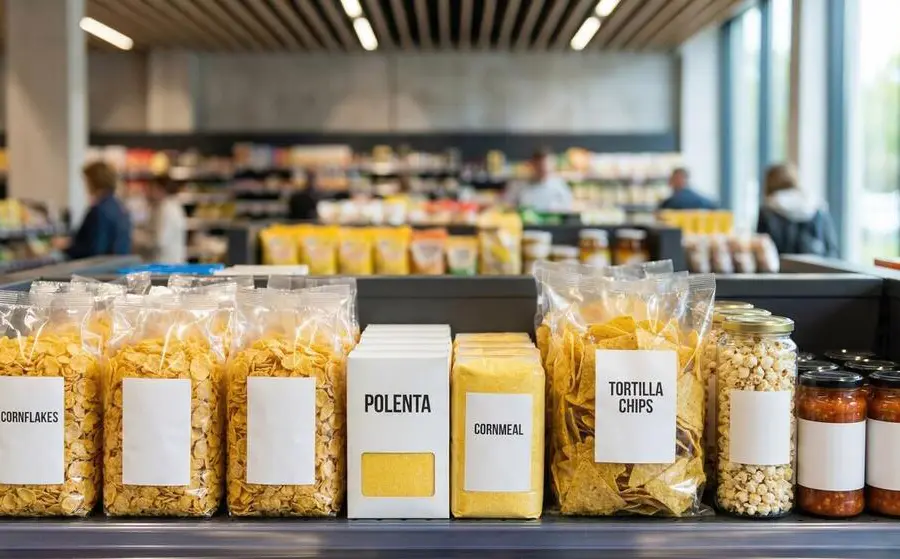
Private label has reached a tipping point in Europe’s FMCG sector, accounting for 50% of unit sales across the region’s six largest grocery markets, according to new data from Circana — a milestone that signals structural change rather than a cyclical shift.
The findings mark the first time own-label products have achieved parity with branded goods across France, Germany, Italy, the Netherlands, Spain and the UK. Growth has been steady and sustained, with private label share increasing annually since 2021.
Penetration varies significantly by market. Spain leads at 59%, followed by the Netherlands at 56%, reflecting the maturity of discounter-led retail models. The UK and Germany now stand at 52%, while France (46%) and Italy (36%) still offer headroom for further expansion.
For manufacturers, this signals a long-term recalibration of category dynamics rather than a temporary inflation-driven spike.
Circana forecasts further acceleration through 2026, driven by two converging forces:
- Persistent inflation: rising input costs—linked in part to geopolitical tensions—are expected to push branded prices higher, reinforcing consumer migration to lower-cost alternatives.
- AI-driven retail ecosystems: as online grocery and algorithm-led shopping tools expand, product selection is increasingly based on functional equivalence and price — areas where private label excels.
This combination is reducing the traditional power of branding, particularly in commoditised and mid-tier categories.
Crucially, private label growth is no longer confined to entry-level products. Retailers are actively reshaping their portfolios to compete across multiple tiers:
- Premiumisation: expansion of high-quality, indulgent and health-focused ranges
- Innovation: faster NPD cycles compared with branded competitors
- Trend alignment: strong positioning in high-protein, lifestyle and wellness categories
Retailers are also leveraging social media to target younger consumers, who demonstrate lower brand loyalty and higher price sensitivity.
The data highlights a growing imbalance in promotional strategies:
- 34% of branded unit sales are sold on promotion
- Just 14% of private label sales rely on discounting
This disparity underscores the margin pressure facing branded suppliers, many of whom are increasingly dependent on price promotions to maintain volume.
Circana warns that this approach is unsustainable, particularly as retailers continue to invest in price-matching, loyalty pricing and everyday low price strategies.
Growth is being driven primarily by food and beverage, with standout performance in: ready meals, snacking, dairy, and beverages, particularly water.
In contrast, non-food CPG categories remain more resilient for branded players, suggesting that brand equity still carries weight where functional equivalence is less easily replicated.
The implications for branded manufacturers are significant:
- Pricing strategy must evolve: competing purely on discounting is eroding margins without delivering long-term loyalty
- Data-led decision-making is critical: deeper use of shopper insights and loyalty data will be essential
- Differentiation must sharpen: innovation, functionality and emotional connection will need to replace reliance on legacy brand equity.