Addressing the future of sustainable fats with Daabon Europa & UK

Manuel Davila, managing director - DAABON EUROPA & UK
Ahead of its participation in the Food Matters Live, Rotterdam, “Tastes of Better” sessions, we sat down with Manuel Dávila, managing director – Daabon Europa & UK, for an in-depth conversation on the future of organic fats and oils.
Daabon’s presence at the event centres on a sensory exploration of their ingredients , aiming to challenge long-standing perceptions and showcase the power of truly sustainable, traceable sourcing. In this preview,
Dávila shares how the company’s vertically integrated model is reshaping the organic palm oil industry, from tackling the crop’s notorious reputation to pioneering the world’s first-to-market carbon-neutral crude palm oil.
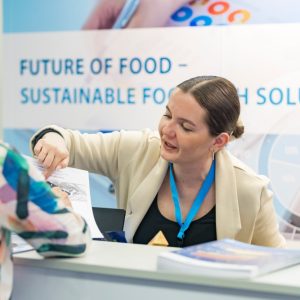
At this year’s Food Matters Live event, Daabon Europa & UK took centre stage with its “Tastes of Better” sessions — a sensory exploration of fats and oils designed to challenge perceptions and showcase the power of truly sustainable ingredients. Leading the discussion, managing director Manuel Dávila shared how Daabon’s vertically integrated, fully traceable model is reshaping the future of organic palm oil and specialty fats.
From tackling long-standing misconceptions about palm cultivation to pioneering carbon-neutral crude palm oil, Dávila emphasised transparency, innovation, and collaboration as the keys to building a more responsible and resilient food system.
Daabon’s “Tastes of Better” sessions promise a sensory deep dive — how are you using this platform to showcase the versatility and sustainability of your organic ingredients in real-world applications?
Food Matters Live offers the best stage possible to be able to deliver a full customer experience to our audience. We get to have a full one-hour session where we go in-depth into different topics. For example, the chemistry of fats & oils and how they behave and enhance food.
Another part of the session we do the tasting course covering four main categories, baking, creams, chocolates and frying. This allows the food technologies to compare crunchiness, smoothness, cool-melting and crumbly textures to name a few.Furthermore, we get to show case how to fix issues such as oil separation, short shelf-life, splitting and oxidations or rancidity. We get to answer all the questions they might have around the world of fats & oils.
Lastly, and equality important, we get to cover the reality behind the palm oil industry, something few people take the time to truly understand, and realize that this is a humble plant that produces a great ingredient which, unfortunately, some people have taken poor decisions, giving it a bad reputation.
Usually in tradeshows we hope to get a bystander to stop and come into our booth and try our products as well to listen to our proposition and offers in a short window of less than five minutes.
You’re offering targeted solutions to VIPs — what are the most pressing challenges you’re hearing from formulators and buyers, and how is Daabon positioned to address them?
The most pressing issues in our case is the bad reputation Palm oil suffers. Palm growers in South East Asia took a very aggressive approach at plantation expansion which caused deforestation at concerning levels. This incident followed anyone in the industry, even if you where at the other side of the world, like us in Colombia.
Therefore, we opt to be the most transparent and sustainable palm oil company in the world. This is reflected by being ranked No 1 in SPOTT (Sustinable Palm Pil Traceability Toolkit) by the NGO ZSL (Zoological Society of London). We have been very successful at proving to all that the issue is not the palm, but the wrong decision taken from some people in the past.
As growers, we are lucky to have such a generous oil crop which offers yield more than 3x-4x any other substitutes (soybean, sunflower, rapeseed) per hectare. We should not demonise the crop, but rather correct the agricultural behaviors and follow the checks and balance to ensure that what people purchase is truly sustainable.
From palm oil derivatives to specialty fats, what category insights can you share that reflect shifting priorities around traceability, functionality, and climate resilience?
In the case of climate resilience we are showcasing our unique and first offer to market of carbon neutral crude palm oil. We have achieved this, not by offsetting, but rather inserting.
We have worked very hard at looking at each step of the LCA (life cycle assessment). We are organic and regenerative agriculture certified, we have anarobic digester processing all of the POME (palm oil mill effluent) extracting methane gas and running our generators. This is truly the way forward if what the world is looking for is reducing the carbon footprint of food.
In the case of traceability, we have been ready for the EUDR (European Union Deforestation Regulation) since early last year. Thanks to the vast amount of certifications we carry, our supply chains have been organised in a way that allows full traceability without mixing. This set up is not common in the industry. So if any food manufacturer is looking for supply chain deforestation risk management: single origin, single farm, look no further, we can help.
Lastly, in the case of functionality, we have seen the impact of inflation and demand destruction. This is why we are now offering a new range of Organics every day low prices. Consumers want to eat organic food, but cannot afford it, therefore we are looking for supermarket private labels to co-create everyday organic items afforadable to all.
How does Daabon’s vertically integrated model influence the way you approach innovation and collaboration at events like Food Matters Live, especially when engaging with decision-makers?
Our vertical integration and super segregated supply chain allows us to create innovation based on the genetics of the palms. Most people do not know, but there are a number of palm varieties and each one gives an every so-slightly different oil. By being vertically integrated, we can bring to market very specific palm oils to which we can then make tailor made specific applications.
Our biggest launch this year is our High Oleic Palm Oil. This oil show an outstanding performance in frying applications. Let us be potatoes, chicken, fish, tempuras, dough-nuts, our innovation is consistently out performing other oils in frying durability (rate of TPM, total politizad material), oil absorption into food, crystallisation speed (oiliness of food at touch after frying) and flavour.