Global project to combat food fraud

The Institute for Global Food Security at Queen’s University Belfast will lead one of the world’s largest food safety projects across Europe and China. The European Horizon 2020 programme and Chinese Ministry of Science and Technology (MOST) programme have awarded €10 million towards an EU-China partnership to improve food safety and tackle food fraud.
Food fraud manifests itself in many ways, from horse meat labelled and sold as beef, as was the case in Europe in 2013, to illicit oil which saw slaughterhouse waste and sewage used in cooking oil, known as the 2014 ‘gutter oil’ scandal in China.
EU-China-Safe will reduce food fraud and improve food safety through focusing on improving food legislation, food inspection and increasing access to information across both continents. Technologies, including a virtual laboratory, will create a unique space to share and demonstrate best practice.
The Hong Kong Polytechnic University (PolyU) will also participate in this food safety initiative.
Reported instances of food fraud are on the increase and occur on a global scale, worth an estimated $52 billion globally each year. Food fraud is a global issue demanding a global response. The increasingly complex global food supply network increases the risks of serious food borne illness.
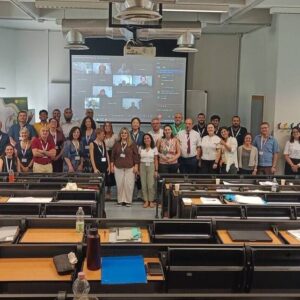
Professor Elliott, pro-vice chancellor at Queen’s and project co-ordinator, adds, “This project will tackle these highly connected issues in a way that will serve to better protect several billion people. There is a pressing need to act internationally in response to emerging threats to food safety and fraud. Working together as a coalition of 33 partners to share knowledge and maximise our technologies will empower the food industry to provide safer, authentic food and will boost consumers’ confidence and ultimately facilitate the expansion of EU-China trade.”
Topics
beef food food fraud food safety horse horse meat meat Partnership safety technology waste
Regions