Cargill’s €56m Belgian expansion boosts European food supply chains
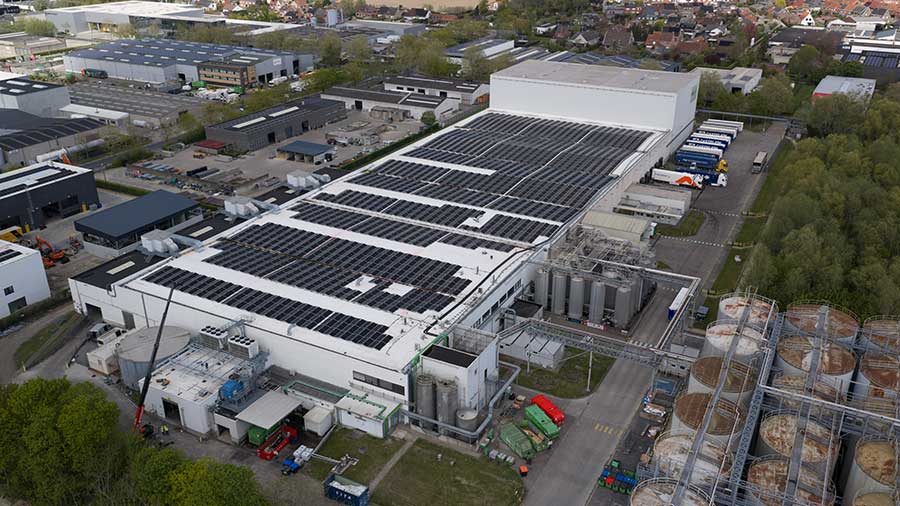
Expansion of Cargill’s edible oils operations in Izegem, Belgium, where the company is investing to increase bottling capacity and strengthen its foodservice production capabilities.
Global agribusiness and ingredient giant Cargill has announced a comprehensive €56 million capital investment programme across its operations in Belgium.
The multi-site expansion targets the company’s edible oils bottling infrastructure, premium gourmet chocolate production lines, and regional research and innovation (R&I) centers.
By scaling up its industrial capabilities in Western Europe, Cargill is directly responding to a sharp increase in customer demand while solidifying Belgium as the central operational hub for its European food ingredient network.
What the multi-site expansion includes
The €56 million funding is divided among three core facilities, each serving a distinct sector of the commercial food manufacturing market:
- Izegem (edible oils bottling plant): backed by a €21 million investment, Cargill transformed approximately 60% of its largest European oil bottling site into a dedicated foodservice hub. The upgrade nearly doubles the facility’s output capacity and introduces automated infrastructure alongside two new dedicated production lines to improve long-term supply reliability.
- Mouscron (gourmet chocolate facility): a €30 million expansion added 10,500 square meters of new production space, almost doubling the factory’s gourmet chocolate processing throughput. This expansion focuses heavily on scaling Cargill’s premium couverture chocolate brand, Veliche, to serve pastry professionals, restaurants, and confectionery manufacturers.
- Vilvoorde (Innovation Center): Cargill allocated €5.4 million to build a state-of-the-art extrusion pilot plant. This facility is engineered for rapid prototyping, product reformulation, and ingredient functionality testing across commercial food, animal feed, and pet food applications.
For commercial bakeries, food manufacturers, and foodservice operators throughout the EMEA region, this infrastructure scaling introduces several strategic business benefits:
1. Reductions in production lead times
By doubling capacity at both the Mouscron and Izegem facilities, Cargill can dramatically shorten order fulfillment windows. This is particularly critical for gourmet chocolate buyers who face extreme seasonal demand spikes around holidays and require reliable, just-in-time ingredient supply.
2. Accelerated product R&D and prototyping
The addition of the extrusion pilot plant in Vilvoorde gives food product developers a highly agile environment to test new ingredient formulations without halting large-scale commercial production lines. This enables faster innovation cycles for texturised plant proteins, specialised animal feeds, and pet food products.
3. Fortified supply chain resiliency
The introduction of advanced automation and flexible manufacturing infrastructure in Izegem shields downstream food manufacturers from market volatility and logistical bottlenecks, reinforcing overall supply chain continuity across Western Europe.
Securing long-term European market position
The strategic focus on Belgium capitalises on the country’s highly developed food industry network, proximity to key consumer markets, and advanced logistics infrastructure. Operating in the nation since 1953, Cargill’s latest move binds its regional supply network closer to its corporate R&D pipeline.
“Belgium is a key strategic hub for Cargill in Europe, thanks to its strong food industry, close customer connectivity, and advanced logistics infrastructure that enable efficient supply across Western Europe,” said Geert Maesmans, vice president of R&D for Cargill’s Food business in EMEA.
“These investments not only strengthen our local food R&D and production capabilities but allow us to continue to grow with our customers and provide them with more diverse and innovative food solutions across Belgium and the EMEA region.”