Technology enables crops to take nitrogen from the air
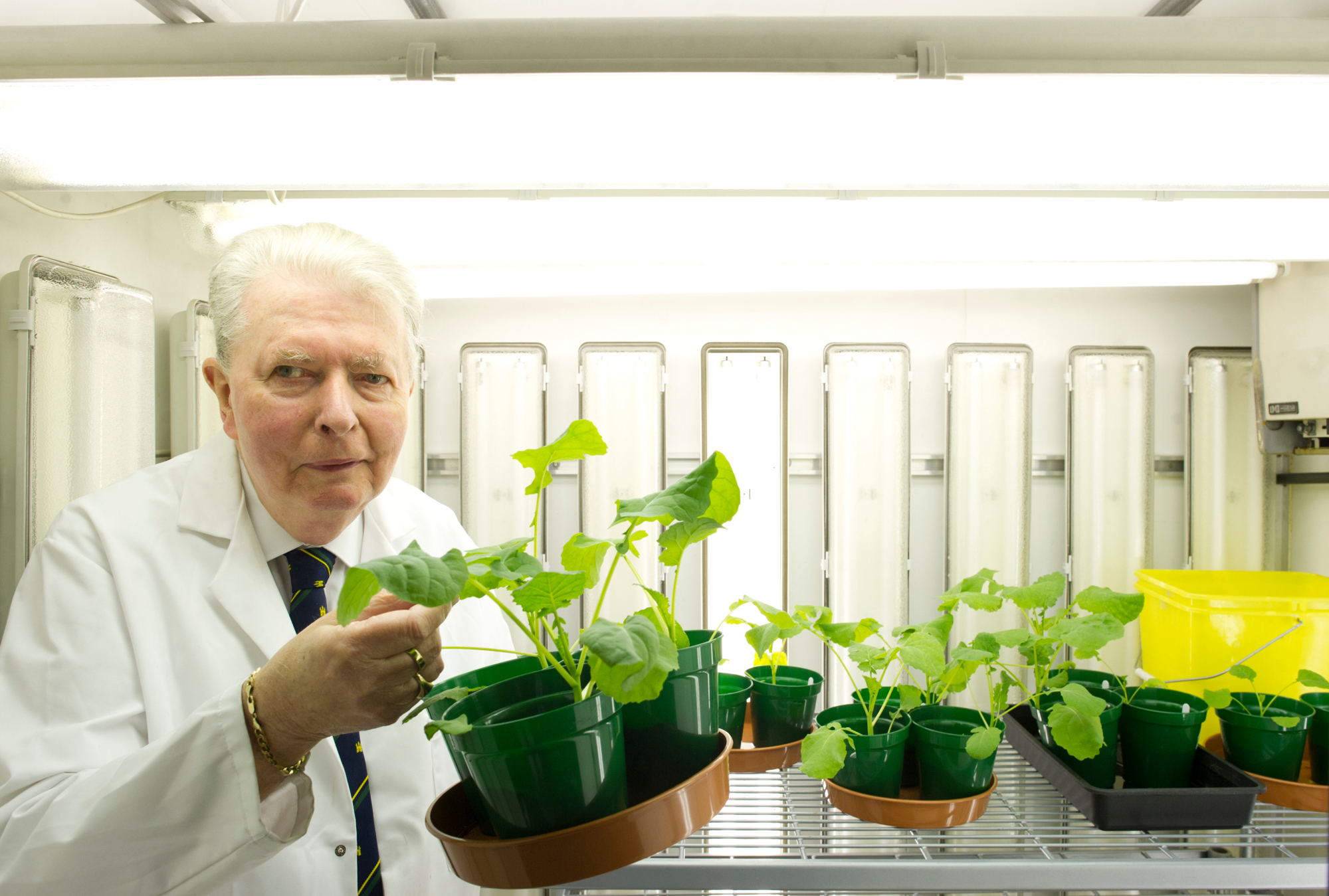
The University of Nottingham believes it has developed a major new technology that enables all of the world’s crops to take nitrogen from the air, rather than from expensive and environmentally-damaging fertilisers.
Nitrogen fixation, the process by which nitrogen is converted to ammonia, is vital for plants to survive and grow. However, only a very small number of plants, most notably legumes (such as peas, beans and lentils) have the ability to fix nitrogen from the atmosphere with the help of nitrogen fixing bacteria. The vast majority of plants have to obtain nitrogen from the soil, and for most crops currently being grown across the world, this also means a reliance on synthetic nitrogen fertiliser.
Professor Edward Cocking, director of The University of Nottingham’s centre for crop nitrogen fixation, has developed a unique method of putting nitrogen-fixing bacteria into the cells of plant roots. His major breakthrough came when he found a specific strain of nitrogen-fixing bacteria in sugar-cane which he discovered could intracellularly colonise all major crop plants. This development potentially provides every cell in the plant with the ability to fix atmospheric nitrogen. The implications for agriculture are enormous, as this new technology can provide much of the plant’s nitrogen needs.
Professor Cocking has long recognised that there is a critical need to reduce nitrogen pollution caused by nitrogen based fertilisers. Nitrate pollution is a major problem as is also the pollution of the atmosphere by ammonia and oxides of nitrogen. In addition, nitrate pollution is a health hazard and also causes oxygen-depleted ‘dead zones’ in our waterways and oceans. A recent study estimates that that the annual cost of damage caused by nitrogen pollution across Europe is £60 billion — £280 billion a year.
Speaking about the technology, which is known as ‘N-Fix’, Professor Cocking says, “Helping plants to naturally obtain the nitrogen they need is a key aspect of world food security. The world needs to unhook itself from its ever-increasing reliance on synthetic nitrogen fertilisers produced from fossil fuels with its high economic costs, its pollution of the environment and its high energy costs.”
N-Fix is neither genetic modification nor bio-engineering. It is a naturally occurring nitrogen-fixing bacteria which takes up and uses nitrogen from the air. Applied to the cells of plants (intra-cellular) via the seed, it provides every cell in the plant with the ability to fix nitrogen. Plant seeds are coated with these bacteria in order to create a symbiotic, mutually beneficial relationship and naturally produce nitrogen.
N-Fix is a natural nitrogen seed coating that provides a sustainable solution to fertiliser overuse and Nitrogen pollution. It is environmentally friendly and can be applied to all crops. Over the last 10 years, The University of Nottingham has conducted a series of extensive research programmes which have established proof of principal of the technology in the laboratory, growth rooms and glasshouses.
Topics
agriculture bacteria coating environment food health natural seeds sugar sustainable technology
Regions