Facing facts on factory hygiene

Hygiene issues have always been important in the food industry – but in recent years their role in underpinning safe food production has been highlighted by their inclusion as a major part of HACCP prerequisites.
In fact, food safety is now seen to be managed and controlled by three fundamental requirements: HACCP programmes; processing environmental prerequisites and quality systems (eg ISO 9000).
This article focuses on some of the processing environmental prerequisites, and covers the design of the food manufacturing infrastructure and the hygienic practices to keep the infrastructure in optimum condition.
Infrastructure design
- The building
The factory site is designed to minimise the challenge of external hazards (insects, rodents, microorganisms, dust, soil etc) on the factory itself – for example, by reducing the number of pest harbourage areas, controlling pest access to waste materials, reducing soil and dust, the downwind siting of effluent plants and the control of unauthorised public access.
The building provides a defence against external factory hazards, such as microorganisms, pests, airborne taints and particulate matter. It also segregates food production from non-food production activities such as engineering workshops, chemical stores, laboratories, offices and canteens. Factories are constructed as a series of zones and barriers that limit the challenge of contaminants.
- Process lines
Process lines are laid out so that they facilitate efficient food manufacturing, maintain product quality, reduce environmental contamination by effectively controlling the movement of raw materials and operatives, and allow space for maintenance and cleaning.
The flow of ingredients and products is such that, ideally, raw materials enter at one end of the factory (dirty end) and are dispatched at the opposite end (clean end). The flow of air and drainage should be away from ‘clean’ areas towards ‘dirty’ zones.
- Ventilation and air flows
Food factories must have sufficient means of natural or mechanical ventilation to provide fresh air for food operatives while not contaminating food products.
Natural ventilation should be through openings that are directly connected to the outside air and so positioned in the external walls and/or roof that effective cross-ventilation is possible.
Mechanical ventilation should be provided to control humidity and ambient temperatures, and to effectively remove particulates, fumes, smoke, steam and vapours and microorganisms.
- Equipment
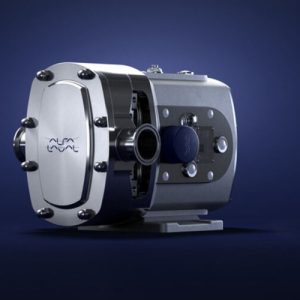
Good hygienic design of equipment helps to prevent residues remaining in the equipment that could contaminate subsequent product batches. It also helps ensure that product is not ‘held-up’ within the equipment where it could deteriorate and affect product quality on rejoining the main product flow.
Good hygienic design reduces the time required for an item of equipment to be cleaned. Reduced down time for cleaning may lead to the opportunity for increased food production. It also prevents the contamination of the product with hazards (pathogens, glass and chemicals) that would adversely affect the health of the consumer.
- Services
Services include process water, steam, electrical supplies, compressed air and other gases.
Potable (hot and cold) water should be used whenever necessary to ensure that foodstuffs are not contaminated. Plumbing and facilities for water storage, distribution and temperature control must ensure that potable water is not contaminated.
Non-potable water should circulate in a separate, identified system. Steam should be generated from potable water, have approved food safe additives, be filtered and have non-return valves to prevent the drawback of product into steam lines. It should also have traps to ensure adequate condensate removal and elimination of foreign materials.
Compressed air or other gasses mechanically introduced into food or used to clean food-contact surfaces or equipment must be dry and filtered to remove microorganisms, lubricants and particulates.
As many services as possible should be exterior to the food processing area and should be carried in false ceilings or service corridors.
- Waste disposal
Waste disposal areas, for the storage and disposal of food waste, non-edible by products and other refuse, must be designed and constructed so that the risk of contaminating food or the potable water supply is avoided, to reduce the attraction of pests and to minimise the potential for odour.
- Medical screening
Food operatives are part of the hygienic infrastructure. Prospective employees must be free from pathogenic microorganisms, and must be aware of their own health and the health of those around them (eg at home), from whom they themselves may become infected.
Once employment has started, any instance of potentially infectious diseases must be reported to the operative’s line management or directly to the first aider or medical department.
Maintaining hygiene standards
- Maintenance
Effective hygienic maintenance is required both for food processing equipment and the processing environment. Maintenance should be preventative, ie planned such that parts and structures are changed/maintained before they fail or become of a nature where they form a microbiological or physical hazard to the product.
Maintenance and repairs to food processing equipment should ideally be undertaken away from the line but if this is not possible, the worksite should be adequately screened. Similarly, repairs to the building fabric should be undertaken out of production periods but if this is not possible, screening should be in place, preferably from floor to ceiling and fully sealed.
- Housekeeping
Housekeeping is undertaken to provide a safe working environment for staff (primarily reducing slips and trip hazards), to minimise any possibilities for contamination from the food processing environment to the food product. It’s also done to minimise the challenge of hazard build-up on the processing line that will need to be controlled by the end-of-production clean.
- Cleaning and disinfection
Cleaning and disinfection are undertaken primarily to remove all undesirable material (food residues, microorganisms, allergens, foreign bodies and cleaning chemicals) from surfaces in an economical manner, to a level at which any residues remaining are of minimal risk to the quality or safety of the product.
The principal stages involved in a typical sanitation programme are:
Preparation– All product and unwanted utensils/packaging/equipment should be covered or removed from the area.
Gross soil removal -All loosely adhered or gross soil should be removed by brushing, scraping, shovelling or vacuum etc.
Pre-rinse– Surfaces should be rinsed with low pressure cold water to remove loosely adhered small debris. Hot water can be used for fatty soils (approximately 60oC), but too high a temperature (>45oC) may coagulate proteins.
Cleaning – Cleaning is a combination of mechanical energy (physical or fluid abrasion), chemical energy (cleaning chemicals), thermal energy and cleaning time. Different cleaning agents are used for specific food soils. Water is the cheapest transport medium for rinsing and dispersing soils.
Chemicals may be applied as low pressure mists, foams or gels, while mechanical energy is provided by high and low pressure water jets or water, or electrically powered scrubbing brushes. Alternatively, dismantled equipment and production utensils may be cleaned and disinfected in soak tanks or automatically in tray or tunnel washers.
Inter-rinse -Both soil detached by cleaning operations and cleaning hemical residues should be removed from surfaces by rinsing with low pressure cold water.
Disinfection– Disinfection is undertaken to remove and/or reduce the viability of remaining microorganisms to a level deemed to be of no significant risk.
Elevated temperature is the best disinfectant as it penetrates into surfaces, is non-corrosive, is non-selective to microbial types, is easily measured and leaves no residue.
Post-rinse– Disinfectant residues may be removed by rinsing away with low pressure cold water of known potable quality.
Following its use for cleaning, cleaning equipment should itself be cleaned and disinfected.
Pest control
Pests are attracted to food processing environments primarily for water, food and shelter. Their presence can lead to consumption of and damage to the food product and packaging, physical contamination (eg rodent droppings), and contamination with disease-causing agents.
The pests relevant to a particular food processing environment can be determined by history and previous findings, inspections by pest control technicians and sightings by company staff. As staff are always on the premises, they are the best source of information on the presence of pest hazards.
Personal hygiene
All food manufacturers should have a Personnel Hygiene Policy in place for all employees, visitors and contractors entering food processing areas.
Induction training is essential to ensure that food operatives recognise that they may act as potential routes of food product contamination, and that they should undertake personal hygiene procedures in a way that minimises such risks.
Of particular importance is the demonstration of an appropriate, validated hand hygiene procedure. Hands need to be washed before embarking upon food handling procedures and after any operation that may lead to them becoming contaminated.
Ensuring food safety
Cleaning and disinfection in food processing plants and factories has always been vitally important but as expectations rise, there are more demands than ever before within the food industry for higher standards of hygienic control.
There is considerably more focus now on the design of the food manufacturing infrastructure and hygienic best practices to ensure the food manufacturing environment and its operatives are working at optimum cleanliness levels.
Good hygienic design of premises and equipment makes maintaining hygiene easier, cheaper and more effective. This will not only reduce running costs but also gives food manufacturers better safety assurance, thus protecting products and brands.